
September 2nd, 2026
Restaurant technology has increasingly moved toward all-in-one platforms that combine websites, online ordering, menus, marketing, guest engagement, and restaurant operations.
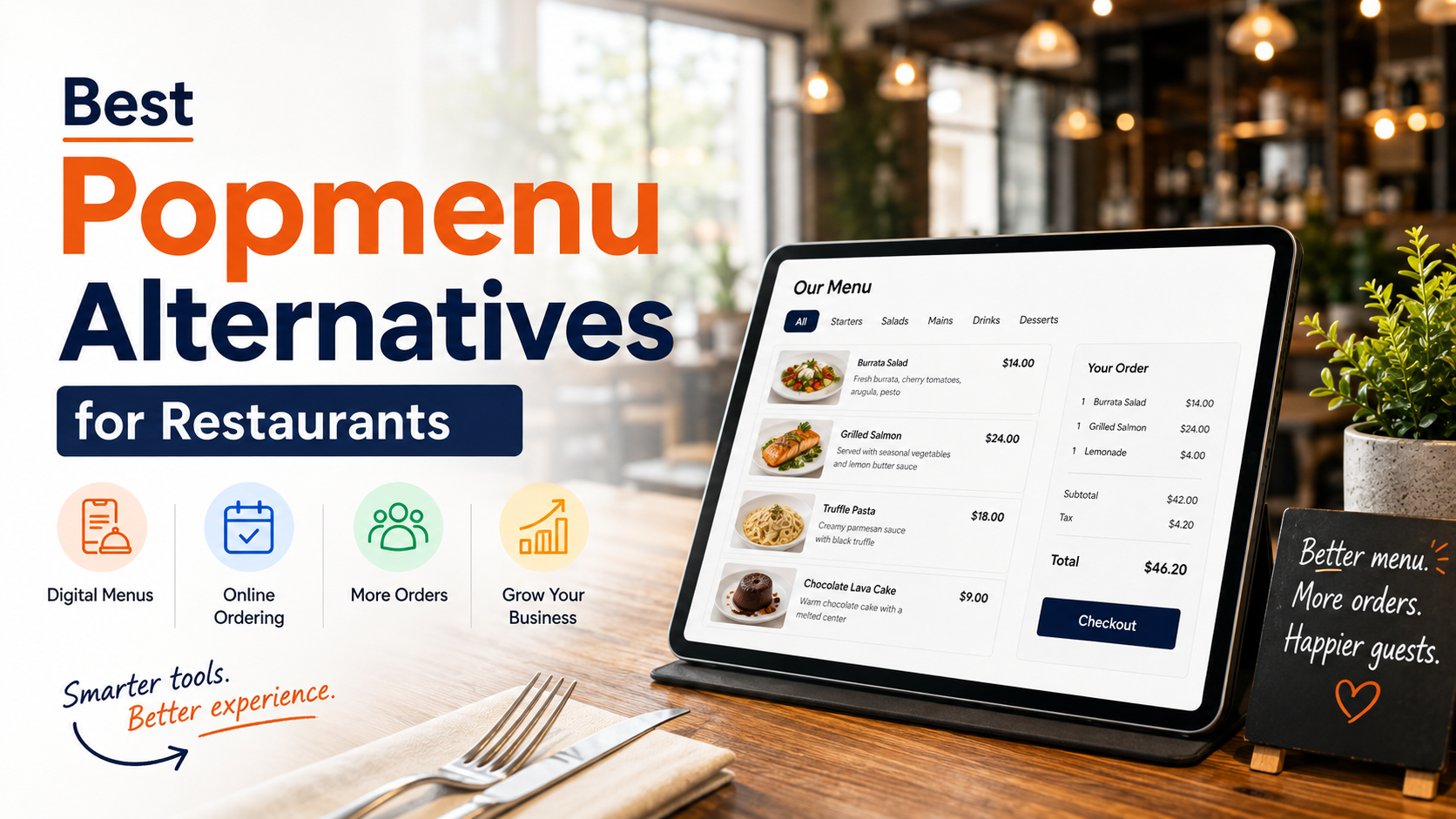
Popmenu is one of the more comprehensive options in this category. Its platform combines restaurant website design, interactive menus, online ordering and delivery, SEO/AEO/GEO, reputation management, email and SMS marketing, loyalty, and other guest-engagement tools.
However, Popmenu isn’t necessarily the right fit for every restaurant. Some operators may want a broader restaurant management platform, stronger POS integration, a simpler website and ordering solution, or more flexibility around which products they use.
This guide compares some of the top Popmenu alternatives for restaurants and explains what each platform is best suited for.
Popmenu’s appeal comes largely from bringing multiple restaurant marketing and guest-engagement functions together. Its current platform includes website design, interactive menus, online ordering, SEO/AEO/GEO, reputation management, marketing automation, loyalty, and other tools.
However, restaurants have different technology requirements.
You may want a stronger restaurant operations platform
Popmenu is heavily focused on the restaurant’s digital presence and guest journey. Restaurants that want their website and marketing tools connected to a broader POS and restaurant management system may prefer an alternative built around restaurant operations.
You may only need specific features
An all-in-one platform can be useful, but some restaurants may not need every component.
For example, a restaurant may already have:
In that case, replacing the entire technology stack may not make sense.
You may want different POS integration
Popmenu supports integrations with several POS platforms, including Toast, Square, Clover, Oracle, NCR Voyix, SpotOn, and others.
Restaurants that want their website, ordering, payments, kitchen, and POS to operate within one ecosystem may instead prefer a platform built around native restaurant operations.
The right alternative depends on which parts of Popmenu are most important to your restaurant.
Key considerations include:
| Feature | Snappy | Popmenu | Toast | BentoBox | Owner.com | Square |
|---|---|---|---|---|---|---|
| Restaurant Website | ✓✓✓ | ✓✓✓ | ✓✓✓ | ✓✓✓ | ✓✓✓ | ✓✓ |
| Online Ordering | ✓✓✓ | ✓✓✓ | ✓✓✓ | ✓✓ | ✓✓✓ | ✓✓✓ |
| Direct Ordering | ✓✓✓ | ✓✓✓ | ✓✓✓ | ✓✓ | ✓✓✓ | ✓✓ |
| POS Integration | ✓✓✓ | ✓✓ | ✓✓✓ | ✓✓ | ✓✓ | ✓✓✓ |
| Restaurant POS | ✓✓✓ | — | ✓✓✓ | — | — | ✓✓✓ |
| Reservations | ✓✓✓ | ✓✓ | ✓✓✓ | ✓✓ | ✓✓ | ✓ |
| Digital Waitlist | ✓✓✓ | ✓✓ | ✓✓✓ | — | ✓ | ✓ |
| Loyalty | ✓✓✓ | ✓✓✓ | ✓✓✓ | ✓✓ | ✓✓✓ | ✓✓✓ |
| Email Marketing | ✓✓✓ | ✓✓✓ | ✓✓ | ✓✓ | ✓✓✓ | ✓✓ |
| SMS Marketing | ✓✓✓ | ✓✓✓ | ✓✓ | ✓✓ | ✓✓✓ | ✓✓ |
| SEO / Local Search | ✓✓✓ | ✓✓✓ | ✓✓ | ✓✓✓ | ✓✓ | ✓ |
| AI / Search Optimization | ✓✓✓ | ✓✓✓ | ✓✓ | ✓✓ | ✓ | — |
| Multi-Location Support | ✓✓✓ | ✓✓✓ | ✓✓✓ | ✓✓ | ✓✓ | ✓✓ |
| Broader Restaurant Platform | ✓✓✓ | ✓✓✓ | ✓✓✓ | ✓ | ✓✓ | ✓✓ |
Best for: Restaurants looking for an all-in-one restaurant technology platform covering operations, ordering, guest engagement, and marketing.
Snappy is a strong alternative for restaurants that want to combine multiple restaurant systems instead of managing separate platforms for POS, online ordering, reservations, loyalty, waitlist, and other functions.
Snappy’s restaurant technology platform includes POS, online ordering, reservations, waitlist, analytics, loyalty, payments, and other restaurant solutions.
Key strengths:
Snappy’s broader restaurant platform is designed around connecting these products rather than treating the website and marketing experience as a separate layer.
Online Ordering
Snappy provides direct online ordering that can be integrated into a restaurant’s digital presence. Its broader POS and online ordering ecosystem is designed to keep menus, orders, payments, and restaurant operations connected.
This can be particularly useful for restaurants that want to reduce the number of disconnected systems their staff need to manage.
POS + Restaurant Operations
One of the biggest differences between Snappy and a marketing-first platform is the role of the POS.
Snappy POS provides tools for order entry, modifiers, menu management, payments, table management, split bills, and reporting.
That makes Snappy particularly relevant to restaurants looking for a platform that goes beyond website and marketing functionality.
Reservations and Waitlist
Restaurants can also add reservations and waitlist functionality.
Snappy Reservation supports online, Google, and phone reservations, guest communication, table management, and AI voice reservations.
Why choose Snappy over Popmenu?
The main difference is restaurant operations.
Popmenu is positioned around the restaurant’s digital storefront, marketing, guest engagement, and online ordering. Snappy takes a broader approach by combining those digital functions with restaurant POS and operational tools.
Best for: Restaurants that want their website, online ordering, and POS closely connected.
Toast offers restaurant websites, online ordering, POS, loyalty, and other restaurant technology.
Its Canadian website platform connects the restaurant website with menus, online ordering, and POS, with automatic menu and pricing synchronization.
Key strengths:
Toast’s online ordering platform supports customizable fonts, colors, imagery, POS integration, loyalty, promotions, Google integration, and multiple fulfillment options.
Toast also offers an upgraded online ordering option that can be hosted directly on a restaurant’s custom domain with additional design and marketing capabilities.
Why choose Toast over Popmenu?
Toast can be attractive to restaurants that want their POS to serve as the operational center of their technology stack.
Best for: Restaurants that prioritize a polished website and digital guest experience.
BentoBox is another restaurant-focused digital platform that can be considered when comparing alternatives to Popmenu.
Its focus is particularly relevant to restaurants that see their website as an important part of their brand and customer acquisition strategy.
Key strengths:
BentoBox can be particularly appealing to restaurants where website presentation and brand experience are major priorities.
Why choose BentoBox over Popmenu?
Restaurants that want a restaurant-specific digital presence with a strong emphasis on website experience may consider BentoBox.
Best for: Independent restaurants looking for websites, online ordering, marketing, and guest engagement.
Owner.com is another all-in-one restaurant technology option that combines digital marketing and restaurant ordering capabilities.
Key strengths:
Owner.com is particularly relevant for independent restaurants that want to reduce the number of separate systems involved in managing their digital presence.
Why choose Owner.com over Popmenu?
Owner.com may appeal to independent operators who want an integrated website, ordering, and marketing solution without building a technology stack from several different vendors.
Best for: Smaller restaurants and cafés already using Square.
Square combines POS, payments, online ordering, websites, and other small-business tools.
Key strengths:
Square can be particularly attractive for smaller restaurants that want a relatively straightforward technology stack.
Why choose Square over Popmenu?
Square makes sense when the restaurant wants its POS and digital ordering tools to operate within the same broader ecosystem.
Rather than choosing a platform based purely on the number of features, restaurants should focus on which parts of the technology stack they actually need.
| What to Consider | What to Look For |
|---|---|
| Restaurant Operations | If you want your POS, online ordering, payments, menu, and other restaurant operations connected, look for a broader restaurant management platform. |
| Website | Consider website design, mobile performance, menu management, SEO capabilities, customization, and how easily staff can make updates. |
| Online Ordering | Look for direct online ordering, mobile-friendly checkout, delivery and pickup options, menu synchronization, and POS integration. |
| Marketing | Consider whether you need email, SMS, loyalty, promotions, guest segmentation, and automated marketing tools. |
| Guest Data | Look for tools that help you collect and use guest information from online orders, reservations, loyalty programs, and other interactions. |
| Reservations & Waitlist | Full-service restaurants should consider reservations, table management, digital waitlists, guest communication, and cancellation management. |
| POS Integration | Determine whether the platform integrates with your existing POS or provides its own POS so menus, orders, payments, and reporting remain connected. |
| Multi-Location Management | Restaurant groups should look for centralized management, location-level controls, shared reporting, and synchronized menus and guest data. |
| Total Cost | Compare monthly platform fees, ordering fees, payment processing, add-ons, marketing costs, and other charges rather than looking only at the advertised base price. |
Popmenu is a strong option for restaurants that want to bring their website, interactive menu, online ordering, marketing, loyalty, and guest-engagement tools together. Its platform is particularly focused on helping restaurants attract guests and turn digital traffic into orders and reservations.
Ultimately, the best Popmenu alternative depends on whether your priority is a better website, direct online ordering, restaurant operations, marketing, POS integration, or an all-in-one restaurant platform.
Snappy is a strong Popmenu alternative for restaurants looking for a broader restaurant technology platform that combines POS, online ordering, reservations, waitlist, loyalty, payments, analytics, and other restaurant tools.
Several platforms offer direct online ordering. Snappy, Toast, BentoBox, and Owner.com are all options worth evaluating. The most important factors are direct ordering capabilities, POS integration, delivery, menu management, guest data, and the overall cost structure.
Not necessarily. An all-in-one platform can simplify management by reducing the number of systems staff need to use, but restaurants should choose based on their actual requirements. If you already have effective tools for POS, website, reservations, and marketing, replacing everything may not be necessary.