
September 4th, 2026
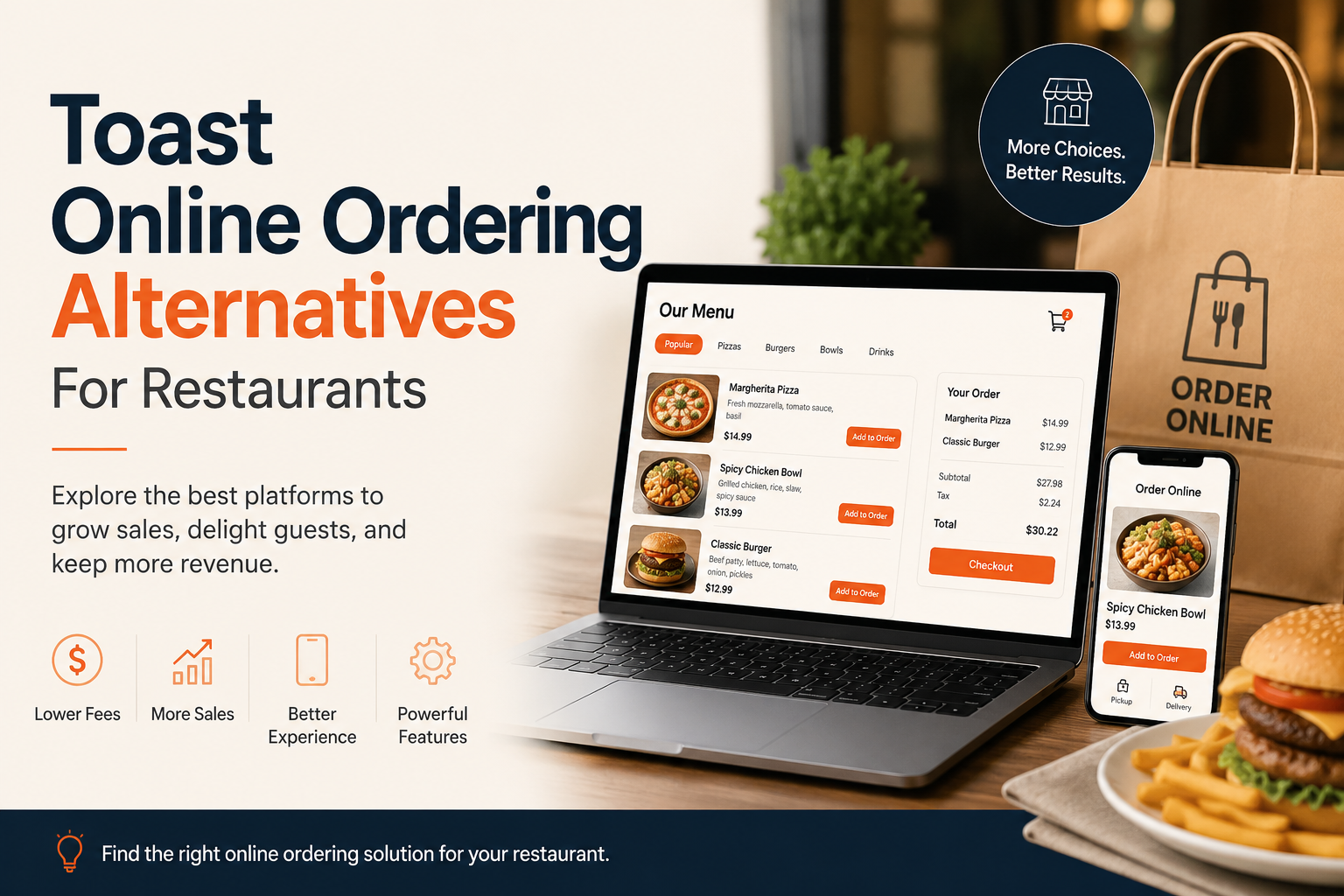
Toast Online Ordering is a popular choice for restaurants that want to accept pickup and delivery orders directly through their own digital presence. It connects online ordering with Toast POS and kitchen systems, supports branded ordering pages, offers Google ordering, and provides tools for loyalty, promotions, and menu management.
However, restaurant operators considering alternatives often look beyond the feature list. Pricing structure, delivery costs, customer support, account management, platform complexity, and control over the ordering experience can all influence whether Toast is the right fit.
This guide looks at the best Toast online ordering alternatives for restaurants, with a focus on the areas operators commonly evaluate when moving away from Toast.
Toast offers a relatively comprehensive online ordering ecosystem. Its current platform includes direct ordering, POS integration, Google ordering, loyalty, promotions, menu management, and delivery services.
But having a large feature set doesn’t necessarily mean it is the best fit for every restaurant.
1. Pricing and Additional Fees
One of the most visible complaints around Toast’s online ordering history involved additional customer-facing fees.
In 2023, Toast introduced a $0.99 online order processing fee in certain digital ordering channels. Restaurant operators publicly criticized the fee, particularly because they felt it could create friction with customers. Toast subsequently announced that it would remove the fee.
Today, Toast promotes its online ordering as commission-free, but restaurants using Toast Delivery Services can still pay flat delivery fees based on delivery distance.
For restaurants evaluating alternatives, the important question is therefore not simply “Is online ordering commission-free?”
Instead, restaurants should look at the total cost per order, including:
2. Customer Service and Support Concerns
Customer support is another area restaurants commonly consider when evaluating Toast alternatives.
Current Trustpilot reviews include complaints involving customer service, billing, account management, and order-related issues. Toast’s Canadian Trustpilot profile currently has a 2.6/5 TrustScore based on more than 1,400 reviews. These are individual reviews and should not be treated as a scientific measure of overall customer satisfaction.
For a restaurant, support quality matters because online ordering is connected to revenue. Problems with menus, payments, order routing, or integrations can affect the customer experience immediately.
When comparing alternatives, restaurants should ask:
3. Platform Complexity
Toast’s strength is also potentially a drawback: it offers a large restaurant technology ecosystem.
For larger restaurants, this can be valuable. Smaller operators, however, may prefer a simpler setup where online ordering doesn’t require managing numerous products and configurations.
A good alternative should make it easy to:
The goal is to make online ordering easier to operate, rather than adding another complicated system for restaurant staff.
| Feature | Snappy | Toast | Square | Clover | Owner.com | BentoBox |
|---|---|---|---|---|---|---|
| Direct Online Ordering | ✓✓✓ | ✓✓✓ | ✓✓✓ | ✓✓ | ✓✓✓ | ✓✓ |
| Commission-Free Ordering | ✓✓✓ | ✓✓✓ | ✓✓ | ✓✓ | ✓✓ | ✓✓ |
| POS Integration | ✓✓✓ | ✓✓✓ | ✓✓✓ | ✓✓✓ | ✓✓ | ✓✓ |
| Order With Google | ✓✓✓ | ✓✓✓ | ✓✓ | ✓✓ | ✓✓ | ✓ |
| Delivery Integration | ✓✓✓ | ✓✓✓ | ✓✓ | ✓✓ | ✓✓ | ✓✓ |
| Real-Time Order Sync | ✓✓✓ | ✓✓✓ | ✓✓✓ | ✓✓ | ✓✓ | ✓✓ |
| Loyalty | ✓✓✓ | ✓✓✓ | ✓✓✓ | ✓✓ | ✓✓✓ | ✓✓ |
| QR Code Ordering | ✓✓✓ | ✓✓✓ | ✓✓ | ✓✓ | ✓ | ✓ |
| Multi-Location Management | ✓✓✓ | ✓✓✓ | ✓✓ | ✓✓ | ✓✓ | ✓✓ |
| Customer Data Ownership | ✓✓✓ | ✓✓✓ | ✓✓ | ✓✓ | ✓✓✓ | ✓✓ |
| Broader Restaurant Platform | ✓✓✓ | ✓✓✓ | ✓✓ | ✓✓ | ✓✓ | ✓ |
Best for: Restaurants looking for direct online ordering, delivery integration, and a broader restaurant technology ecosystem.
Snappy Online Ordering & Delivery offers restaurants a direct ordering platform designed to connect online orders with restaurant operations.
A major differentiator is its 0% commission fee on online orders. Snappy also allows restaurants to accept orders through their website and Google while maintaining ownership of customer data.
Key strengths:
Snappy also integrates with popular delivery apps, allowing restaurants to use third-party delivery infrastructure without necessarily making those marketplaces the primary ordering channel.
Google Ordering
Snappy supports ordering directly from Google Search and Maps, allowing customers to discover a restaurant and move directly into the ordering experience.
This can be particularly valuable for restaurants that generate significant local-search traffic.
Delivery
Restaurants can combine direct ordering with delivery integrations rather than forcing customers through a third-party marketplace.
Snappy states that its delivery solution can help restaurants reduce delivery commissions while supporting integrated delivery services.
Why choose Snappy over Toast?
The biggest reason is flexibility and cost structure.
Restaurants looking for an alternative to Toast can use Snappy to centralize online ordering, delivery, loyalty, payments, and related restaurant functions while maintaining a direct relationship with customers.
Best for: Small restaurants and cafés already using Square POS.
Square can be a natural Toast alternative for restaurants that want online ordering connected to their existing Square ecosystem.
Key strengths:
The biggest advantage is simplicity for restaurants that already use Square.
Instead of introducing an entirely new restaurant technology ecosystem, operators can build online ordering around the tools they already use.
Best for: Restaurants already operating on Clover.
Clover provides online ordering capabilities alongside its POS and payment ecosystem.
Key strengths:
Clover can make sense when the restaurant already has Clover hardware and wants to extend its existing system into online ordering.
Best for: Independent restaurants focused on direct online ordering and digital customer acquisition.
Owner.com focuses heavily on helping restaurants build direct relationships with customers rather than relying entirely on third-party ordering marketplaces.
Key strengths:
For independent restaurants, this can be attractive when the goal is to turn online traffic into direct orders and repeat customers.
Best for: Restaurants that prioritize website design, branding, and digital guest experience.
BentoBox is another restaurant-focused platform that combines website and digital restaurant tools.
Key strengths:
BentoBox is particularly relevant for restaurants where the website is an important part of their brand and customer acquisition strategy.
| Area to Evaluate | What to Look For |
|---|---|
| Cost | Compare monthly fees, ordering fees, delivery fees, payment processing, and additional software modules. |
| POS Integration | Check how online orders flow into the POS, kitchen, and other restaurant operations. |
| Menu Management | Look for simple management of prices, modifiers, item availability, and menu updates. |
| Ordering Experience | Evaluate checkout speed, mobile ordering, branding options, and ease of payment. |
| Delivery | Check delivery integrations, per-order fees, order tracking, and delivery management tools. |
| Customer Data | Make sure the restaurant can access customer data generated by direct orders and use it to build repeat business. |
| Google Ordering | Check whether customers can discover the restaurant and place orders directly through Google Search and Google Maps. |
| Loyalty | Look for tools that turn online customers into repeat customers through loyalty programs, rewards, and promotions. |
| Multi-Location Management | For restaurant groups, look for centralized management of menus, orders, customer data, and reporting across locations. |
| Support | Evaluate customer support availability, response times, and the level of assistance provided when technical or operational issues arise. |
Toast remains a comprehensive restaurant technology platform, but it isn’t necessarily the best fit for every restaurant. Concerns around pricing, delivery fees, platform complexity, and customer support can lead operators to explore other online ordering solutions.
The best alternative depends on what your restaurant values most. Square and Clover can be practical choices for restaurants already using their respective POS systems, while Owner.com and BentoBox are worth considering for restaurants focused heavily on their website and direct customer acquisition.
Ultimately, the right Toast alternative should do more than provide an online ordering page. It should make it easier to generate direct orders, reduce unnecessary costs, streamline restaurant operations, and build lasting relationships with customers.
Reasons can vary, but common considerations include pricing, delivery costs, customer support, platform complexity, and the desire for a different technology ecosystem. Public reviews also contain individual complaints about customer service and billing, although these reviews do not establish that every Toast customer has the same experience.
Snappy is a strong alternative for restaurants looking for direct, commission-free online ordering combined with delivery integrations, Google ordering, loyalty, customer data, and broader restaurant management tools.
That depends on the alternative and the POS you are using. Restaurants should verify POS integrations before switching, particularly if they want online orders to flow automatically into their kitchen and order-management workflows.