
September 30th, 2026
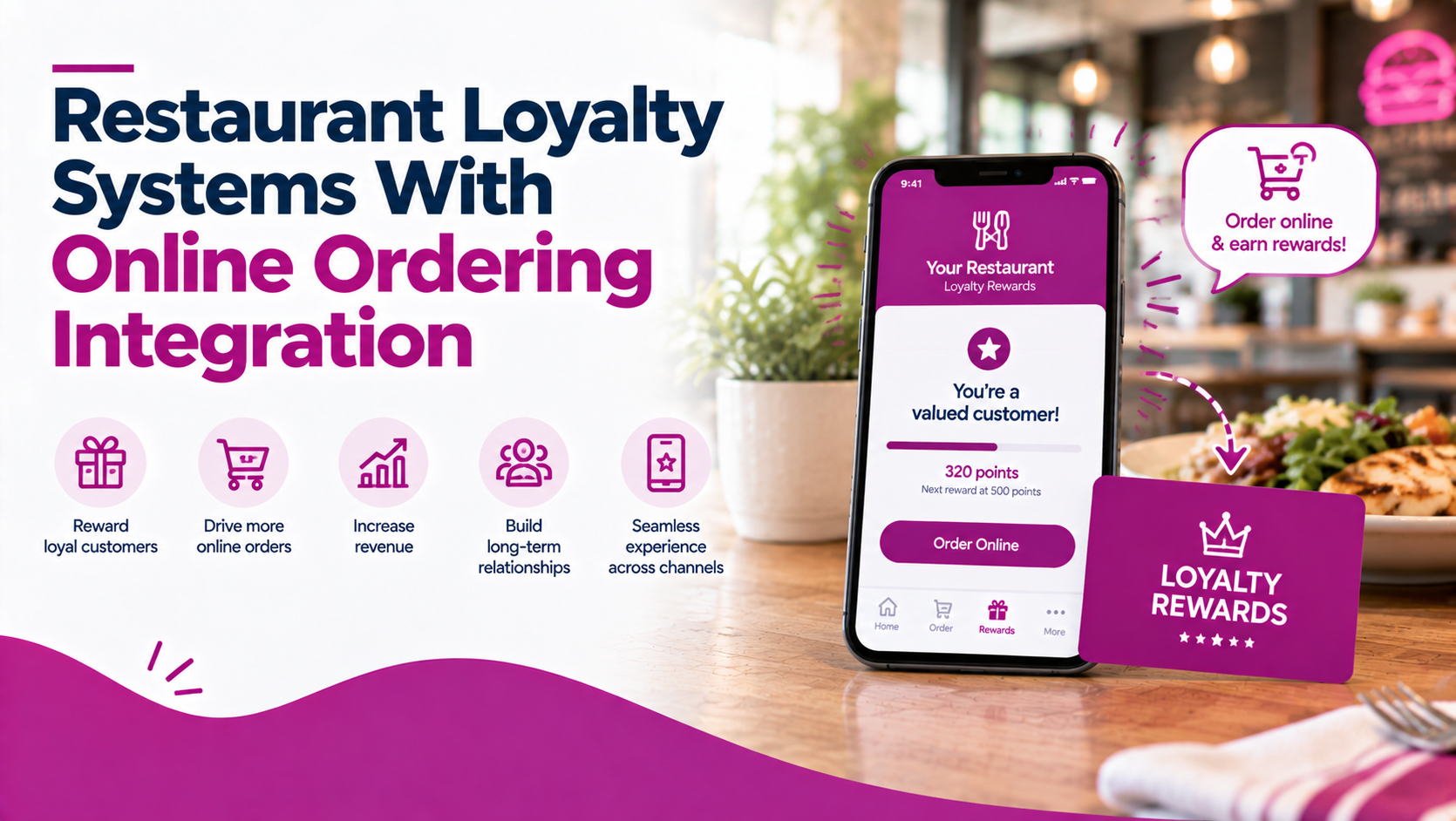
Restaurant loyalty programs are no longer limited to punch cards, discounts, or points earned at the register. Today, a loyalty system can be connected to online ordering, POS, customer profiles, marketing, and other digital channels to create a more connected customer experience.
A customer may order in person one day, place a pickup order through the restaurant’s website the next week, and receive an email or SMS promotion a few days later. A well-integrated loyalty system can connect those interactions and give the restaurant more opportunities to encourage the next purchase.
Options such as Snappy Loyalty, Toast Loyalty, and Square Loyalty take different approaches to connecting rewards with restaurant ordering and customer engagement. But there are several factors restaurants should consider before choosing a platform.
A loyalty program is most useful when it works where customers actually order.
If customers can earn points at the restaurant but not when they order online, the restaurant may be creating separate customer experiences. The customer has to remember different rules depending on how they place an order.
Online ordering integration can make loyalty part of the normal ordering process.
For example, a restaurant could allow a customer to:
Toast, for example, allows customers to enroll and earn points through supported online ordering channels, as well as POS and kiosks.
Snappy states that its loyalty system allows points to be collected both in-store and online.
Square similarly allows customers to enroll through Square Online and redeem rewards online or in-store.
This connection between ordering and loyalty can be particularly important for restaurants trying to build more direct relationships with their customers.
Choosing a restaurant loyalty system involves more than comparing how many points customers receive.
Online Ordering Integration
Customers should be able to participate in the loyalty program when placing direct online orders.
Look for a system where loyalty is integrated into the ordering experience rather than requiring customers to use a separate process.
Toast, for example, supports loyalty enrollment and points through Toast Online Ordering.
POS Integration
A customer may order online one day and visit the restaurant the next.
POS integration allows those transactions to contribute to the same customer loyalty profile instead of creating separate records.
Flexible Rewards
Restaurants have different objectives.
One restaurant may want to reward every dollar spent. Another may want to reward visits, specific menu items, or higher-value purchases.
Square allows restaurants to configure earning based on visits, spending, items, or categories. Toast also allows restaurants to configure how guests earn points and customize rewards.
Customer Data
Loyalty can also be a way to build a first-party customer database.
Snappy says restaurants can collect customer information such as names, birthdays, and email addresses and use that information for personalized SMS and email campaigns.
This can help connect loyalty with broader customer marketing instead of treating the rewards program as a standalone system.
Marketing Integration
A loyalty program becomes more useful when restaurants can use customer information to create relevant campaigns.
For example, a restaurant could promote:
Restaurant groups should also consider how loyalty works across locations.
Toast allows a loyalty program to be shared across participating locations, allowing guests to use one account across those locations.
Snappy also describes the ability to share points between participating restaurants when configured accordingly.
Third-Party Ordering
This is an important consideration that can easily be overlooked.
A restaurant may have direct online ordering as well as orders coming through DoorDash, Uber Eats, Grubhub, or other marketplaces.
Those channels don’t necessarily provide the same loyalty capabilities.
For example, Toast states that its loyalty points cannot be earned or redeemed on orders submitted through DoorDash, Grubhub, or Uber Eats integrations.
Restaurants should therefore determine exactly which ordering channels participate in their loyalty program before choosing a system.
| Feature | Snappy Loyalty | Toast Loyalty | Square Loyalty |
|---|---|---|---|
| Online ordering integration | ✓✓✓ | ✓✓✓ | ✓✓✓ |
| In-store loyalty | ✓✓✓ | ✓✓✓ | ✓✓✓ |
| Points-based rewards | ✓✓✓ | ✓✓✓ | ✓✓✓ |
| Custom rewards | ✓✓✓ | ✓✓✓ | ✓✓✓ |
| Referral program | ✓✓✓ | — | — |
| Bonus / double points | ✓✓✓ | ✓✓✓ | ✓✓✓ |
| Customer data collection | ✓✓✓ | ✓✓✓ | ✓✓✓ |
| SMS / email marketing | ✓✓✓ | ✓✓✓ | ✓✓ |
| Tiered rewards | ✓✓✓ | ✓✓✓ | ✓✓✓ |
| Multi-location support | ✓✓✓ | ✓✓✓ | ✓✓✓ |
| Kiosk integration | ✓✓✓ | ✓✓✓ | ✓✓✓ |
| Direct online ordering | ✓✓✓ | ✓✓✓ | ✓✓✓ |
| Restaurant-focused platform | ✓✓✓ | ✓✓✓ | ✓✓ |
| POS integration | ✓✓✓ | ✓✓✓ | ✓✓✓ |
Capabilities may vary by plan, configuration, geography, and available integrations. This comparison reflects capabilities described by the respective vendors and is not an independent performance evaluation.
Snappy Loyalty is a restaurant-focused loyalty system designed to connect rewards with both online and in-store customer activity.
Online and In-Store Points
Snappy allows customers to collect points both in-store and online.
This can help restaurants maintain a single loyalty experience across different ordering behaviours.
Snappy’s broader product ecosystem also connects loyalty with its online ordering platform, helping restaurants combine direct digital ordering with customer rewards.
Flexible Rewards
Restaurants can create their own points and reward structures.
Snappy says administrators can update points and rewards, while tiered rewards can be configured with different earning rates and requirements.
Restaurants can also offer double rewards for selected items or categories.
This can be useful when a restaurant wants to use loyalty to promote specific products or encourage particular purchasing behaviours.
Referral Programs
Snappy Loyalty includes a referral program for customers and their friends.
Referral incentives give restaurants another mechanism for encouraging existing customers to introduce new customers to the brand.
Customer Data and Personalized Marketing
Snappy says restaurants can collect names, birthdays, and email addresses through its loyalty system. That information can then be used for personalized SMS and email campaigns.
This makes customer data an important part of the loyalty strategy rather than simply a record of points.
Loyalty Across Restaurants
For restaurant groups, Snappy says points can be shared between participating restaurants when configured accordingly.
This can be useful for groups operating multiple concepts or locations that want to create a connected loyalty experience.
Toast Loyalty is Toast’s integrated loyalty program for restaurants using the Toast ecosystem.
It allows guests to enroll, earn points, and redeem rewards through supported Toast channels, including POS, online ordering, kiosks, and other digital ordering experiences.
Online Ordering
Toast Loyalty connects directly with Toast Online Ordering.
Customers can earn points from eligible online orders when their phone number or email is associated with their loyalty account.
Customers can also sign up for Toast Loyalty through the online ordering experience.
Points and Rewards
Restaurants can configure how customers earn points and choose the rewards they offer.
Toast supports points based on purchases or visits, depending on the restaurant’s configuration.
Toast also supports tiered item rewards under its loyalty functionality.
Encouraging Direct Online Orders
One interesting feature for restaurants focused on direct ordering is Toast’s Dining Option Bonus.
Restaurants can offer additional points when customers order online, choose takeout, or use other selected ordering options. Toast specifically describes using double points to encourage customers to order directly through Toast instead of third-party delivery platforms.
This demonstrates how loyalty can be used not just for retention, but also to influence where and how customers order.
Kiosk and In-Store Loyalty
Toast Loyalty can work across supported POS, kiosks, guest-facing displays, and online ordering channels.
Customers using a Toast kiosk can look up or create a loyalty account and earn points on their order.
Multi-Location Loyalty
Toast supports shared loyalty programs across participating locations.
Customers can use a single loyalty account across participating locations within the restaurant group.
Third-Party Ordering Considerations
Restaurants should pay close attention to third-party ordering limitations.
Toast states that loyalty points cannot be earned or redeemed on orders submitted through DoorDash, Grubhub, or Uber Eats integrations.
This means restaurants that receive significant third-party marketplace volume should evaluate how that channel fits into their overall loyalty strategy.
Square Loyalty is designed to work with the Square ecosystem, including Square Point of Sale and Square Online.
Square describes its loyalty system as a way for businesses to encourage repeat purchases through configurable earning rules and rewards.
Square Online Integration
Customers can enroll through a restaurant’s Square Online site and earn and redeem rewards through supported online and in-store experiences.
Square’s online ordering platform also promotes loyalty as a tool for encouraging repeat visits and combines it with other customer engagement features such as personalized promotions.
Flexible Earning Rules
Square allows businesses to choose whether customers earn points based on:
This gives restaurants different ways to structure their loyalty program around specific business objectives.
Online and In-Store Rewards
Square states that customers can redeem rewards both in-store and online.
Customers can also sign up through the point of sale, Square Online, invoices, or a shareable signup link.
Automated Notifications
Square Loyalty includes transactional text notifications when customers earn points or rewards.
For restaurants looking to keep customers informed about their loyalty status without manually sending every notification, this can be an important part of the customer experience.
There isn’t one loyalty system that fits every restaurant.
Snappy Loyalty is designed around restaurant operations and connects loyalty with online and in-store points, referrals, customer information, rewards, and marketing.
Toast Loyalty is closely integrated with the Toast ecosystem, including POS, online ordering, kiosks, and other supported Toast channels. It also provides tools such as dining-option bonuses that can be used to encourage particular ordering behaviours.
Square Loyalty connects loyalty with Square POS and Square Online and allows restaurants to configure different earning rules based on visits, spending, items, or categories.
But the provider is only one part of the decision.
The more important question is how the loyalty system fits into the restaurant’s overall customer journey.
A restaurant should consider whether its loyalty program can:
The strongest loyalty strategy is therefore not necessarily the one with the most rewards. It is the one that fits the restaurant’s ordering channels, customer behaviour, technology, and retention goals.
Yes. Several restaurant loyalty platforms integrate with online ordering.
Toast Loyalty allows customers to earn points through supported Toast Online Ordering channels, while Snappy states that customers can collect points both online and in-store.
Square also supports loyalty enrollment through Square Online and online reward redemption
It depends on the loyalty platform and its integrations.
For example, Toast states that customers cannot earn or redeem Toast Loyalty points on orders submitted through DoorDash, Grubhub, or Uber Eats integrations.
Restaurants should verify the supported channels before choosing a loyalty platform.
Restaurants should consider online ordering integration, POS integration, flexible rewards, customer data, marketing capabilities, multi-location support, referrals, personalization, and the ease of signing up and redeeming rewards.
The restaurant should also determine whether the program works with its direct and third-party ordering channels.
Yes. Restaurants can use bonus points and other incentives to encourage customers to order directly.
Loyalty programs are designed to encourage repeat visits and purchases by providing customers with incentives to return. Actual results depend on factors such as the reward structure, customer participation, marketing strategy, and overall restaurant experience.