
May 26th, 2026
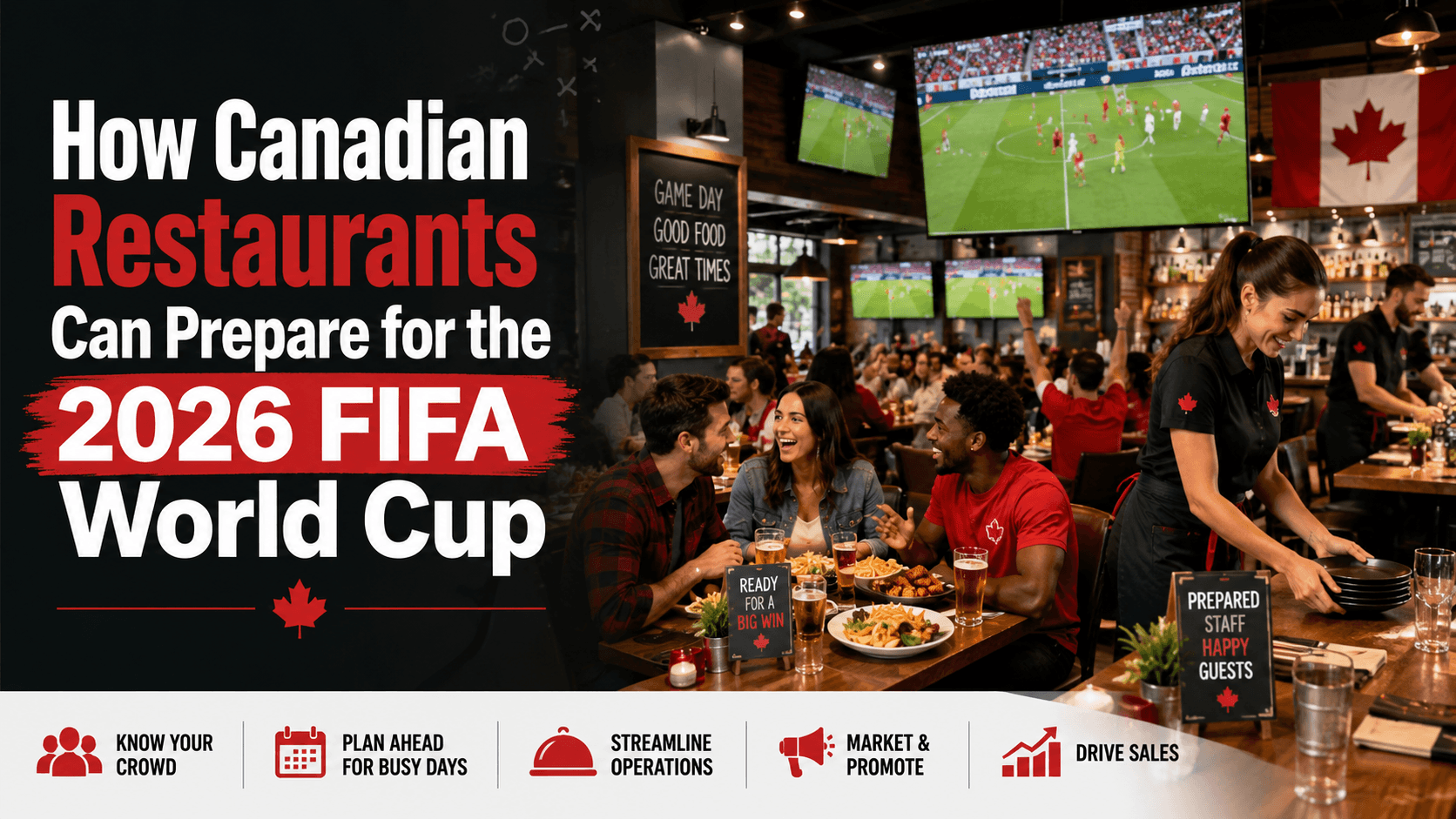
The 2026 FIFA World Cup will create a major sales opportunity for Canadian restaurants, especially in Toronto and Vancouver, where Canada’s host-city matches will be played. For restaurant operators, the opportunity goes beyond stadium traffic. Fans will be looking for places to eat before matches, watch games with groups, order takeout from hotels and condos, book tables for celebrations, and gather around neighbourhood restaurants throughout the tournament.
The restaurants that win the most during the tournament will not be the ones that simply “get busy.” They will be the ones that prepare their operations, menu, staffing, online ordering, reservations, local visibility, and customer data strategy ahead of time.
The first step is to treat the tournament like a multi-week restaurant campaign. Restaurants in Toronto and Vancouver should map every local match date, Canada match, and major knockout game into a planning calendar.
Demand will not be the same for every match. A weekday afternoon game may drive lunch, office catering, pickup orders, and early dinner traffic. An evening match may create stronger dine-in, bar, delivery, and post-game demand. Weekend matches may drive family groups, tourists, and larger reservations.
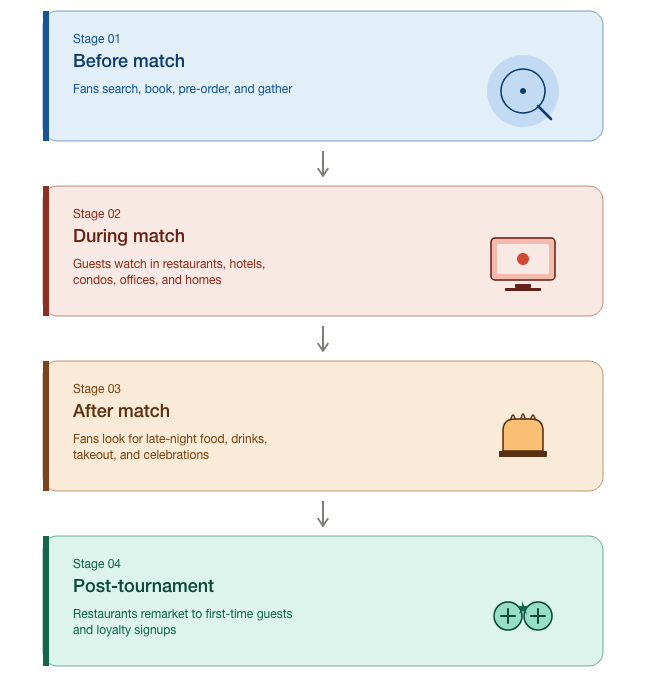
Restaurants should also pay attention to matches involving countries with strong local communities. Even if the game is not hosted in your city, fans may still gather at neighbourhood restaurants to watch.
During the World Cup, guests will want fast service, easy ordering, and shareable food. Restaurants should avoid relying on their full menu during peak match windows if it slows down the kitchen or creates longer wait times.
A better approach is to create a temporary game-day menu with:
|
Menu Strategy
|
Best Use Case
|
Example
|
|---|---|---|
|
Pre-match express menu
|
Dine-in guests with limited time
|
Burger combo, rice bowl, pizza slice combo
|
|
Group platters
|
Offices, hotels, parties, fan groups
|
Wings, sliders, tacos, sushi trays, pizza bundles
|
|
Country-inspired specials
|
Matches with strong local fan communities
|
German-style platter, Croatian grill feature, Canada-themed menu
|
|
Takeout bundles
|
Delivery and pickup
|
“Feeds 4” or “Feeds 8” match-day package
|
The best game-day items are fast to produce, easy to package, and profitable. Operators should feature these items on their website, online ordering menu, Google Business Profile, email campaigns, SMS campaigns, and in-store signage.
A major portion of World Cup demand will happen outside the dining room. Fans will order food from hotels, condos, short-term rentals, offices, house parties, and local watch gatherings.
Restaurants should make sure their direct online ordering system is ready before the tournament starts. This includes clear menu categories, scheduled pickup, group bundles, promo codes, delivery zones, and mobile-friendly checkout.
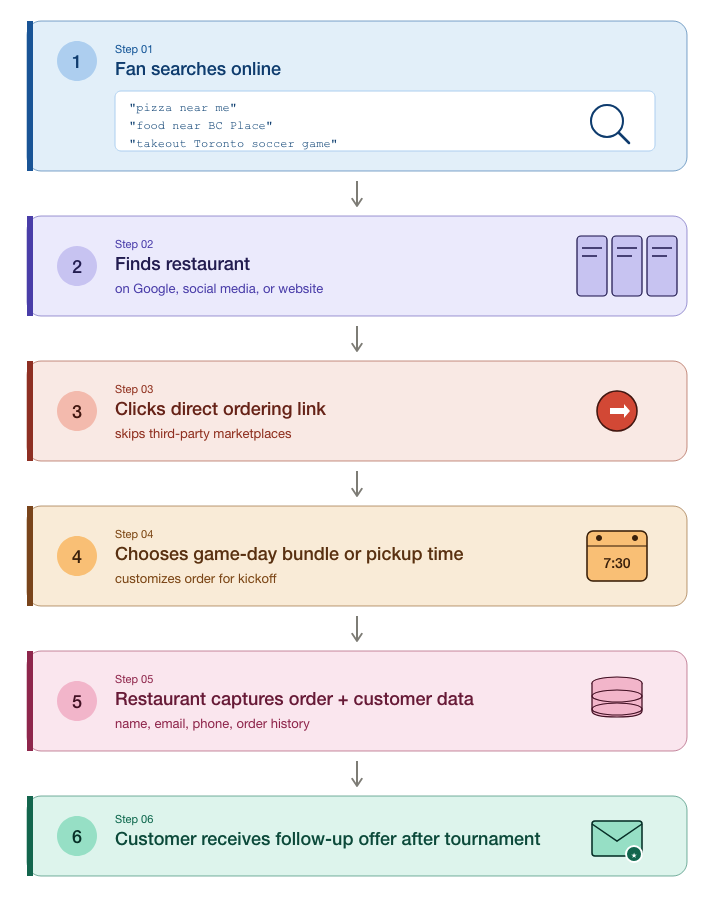
Restaurants that rely only on third-party apps may capture some volume, but they can lose margin and customer ownership. Direct ordering gives restaurants more control over pricing, promotions, customer data, and repeat marketing.
For Toronto and Vancouver operators, useful online ordering categories could include:
For full-service restaurants, bars, pubs, and casual dining brands, the biggest challenge may be managing unpredictable demand. A restaurant may be quiet three hours before a match and then suddenly overwhelmed by groups.
Restaurants should prepare with:
Restaurants should avoid leaving this to chance. If a 7 p.m. match is expected to drive demand, operators can plan a pre-match seating around 4:30–6:00 p.m., a viewing seating around kickoff, and a post-game seating later in the evening.
During the tournament, many guests will make fast decisions from their phones. They may be tourists, locals near a fan zone, hotel guests, or people looking for a place to watch a match nearby.
Restaurants should update their Google Business Profile with:
Toronto restaurants should pay special attention to areas such as downtown, Liberty Village, King West, Queen West, the Waterfront, Union Station, Parkdale, Little Italy, Danforth, Scarborough, North York, and Mississauga.
Vancouver restaurants should focus on downtown, Yaletown, Gastown, Chinatown, Granville, False Creek, Commercial Drive, Kitsilano, Richmond, Burnaby, and transit-connected neighbourhoods.
The World Cup is not only a sports event. It is also a cultural event. Toronto and Vancouver both have large multicultural communities, which means restaurants can build promotions around fan groups, cuisines, and match-day celebrations.
Restaurants can create:
The key is to keep the messaging community-focused and avoid implying official sponsorship. Safer language includes “soccer night,” “match-day specials,” “Canada game menu,” or “international football viewing.”
Avoid using official FIFA logos, tournament marks, or sponsor-style wording unless you have permission.
Adding more staff helps, but only if they are assigned to the right pressure points. During World Cup rush periods, the issue may not always be total labour. It may be a specific bottleneck.
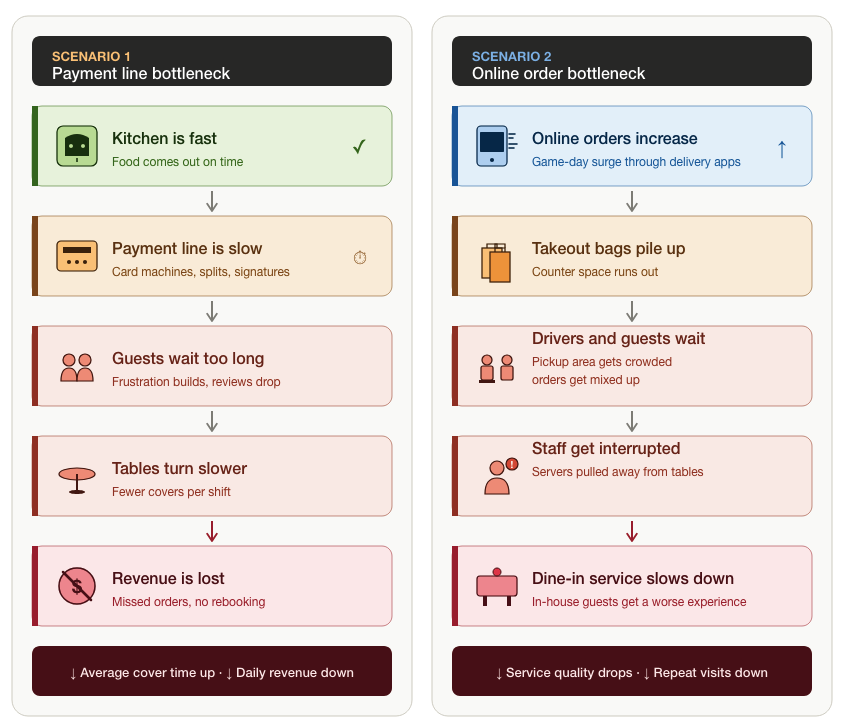
Restaurants should assign staff to specific roles:
This helps restaurants serve more customers without creating chaos.
Payment speed can directly impact sales during high-traffic periods. If customers wait too long to order or pay, restaurants lose table turns, pickup efficiency, and guest satisfaction.
|
Bottleneck
|
Operational Fix
|
|---|---|
|
Guests waiting to pay
|
Use pay-at-table or handheld payment terminals
|
|
Long counter lines
|
Add self-serve kiosks or QR ordering
|
|
Too many phone calls
|
Use missed-call SMS or AI phone answering
|
|
Takeout congestion
|
Create a separate pickup counter
|
|
Outdoor or event-style service
|
Use cellular-enabled payment terminals
|
|
Slow table turnover
|
Let servers close bills directly at the table
|
For quick-service restaurants, kiosks can reduce pressure on front-counter staff. For full-service restaurants, handheld terminals and pay-at-table can help servers turn tables faster before and after matches.
The 2026 FIFA World Cup will be a major opportunity for Canadian restaurants, especially in Toronto and Vancouver. But the best results will come from preparation, not luck.
Restaurants should plan match-day calendars, simplify menus, improve direct online ordering, prepare reservations and waitlists, update local SEO, staff around bottlenecks, speed up payments, and capture customer data. The goal is not only to handle the rush. The goal is to turn tournament traffic into profitable sales, stronger visibility, and repeat customers after the final match is over.
For restaurant operators, the World Cup should be treated like a full sales season. The restaurants that prepare early will be in the strongest position to win during Canada’s biggest soccer summer.
Restaurants should create a match-day sales calendar, simplify menus, update Google Business Profile, prepare direct online ordering, add reservation or waitlist tools, staff for rush periods, and create group ordering offers.
Toronto and Vancouver restaurants can increase sales by promoting pre-match dining, watch-party reservations, takeout bundles, late-night menus, direct delivery, group platters, and local SEO campaigns targeting nearby fans and tourists.
Restaurants should be careful with official FIFA names, logos, trophy images, and sponsor-style language. Unless they have permission, it is safer to use generic phrases like “soccer night,” “match-day specials,” or “international football viewing.”