December 5th, 2025
AI search is changing how customers discover restaurants. Instead of typing “best Thai restaurant near me” into Google, more diners are asking ChatGPT, Google AI Mode, and Perplexity for personalized recommendations.
In these AI-generated answers, only a handful of restaurants get visibility and unlike traditional SEO, your restaurant may not appear even if you rank well on Google.
This article explains how AI models choose restaurants, and what you must do to ensure your brand appears inside ChatGPT and Google AI Mode.
Optimize your Google Business Profile: keep hours, menu, photos, and categories accurate and updated weekly.
Add comprehensive schema markup so AI engines can understand your restaurant.
Publish AI-readable content: clear menu descriptions, FAQ pages, and helpful blogs that answer common dining questions.
Increase review volume + respond consistently to boost AI trust and sentiment signals.
Use structured listings: to strengthen your authority across the web.
Create brand mentions across blogs, influencers, and local media so AI models have more signals to reference.
Ensure your menu is readable by AI: avoid PDFs; use HTML menus with Menu Schema.
Optimize for conversational search with Q&A content and location-based pages.
Keep branding + business data consistent across every platform to improve AI confidence scores.
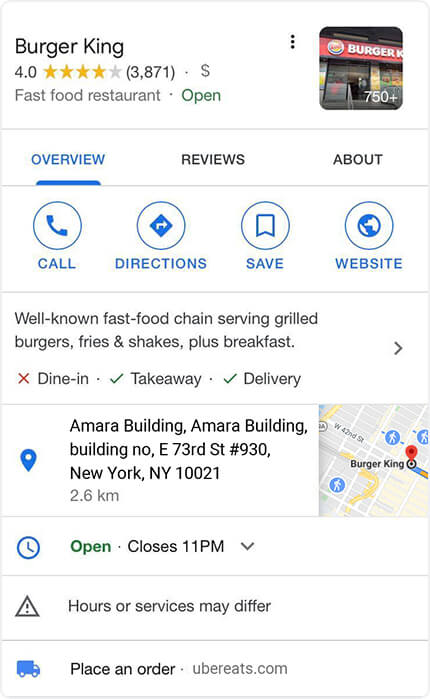
Google AI Mode relies heavily on structured business data, and your GBP is the most important input.
Actions to improve AI visibility
Make sure menus are complete and reflect real-time pricing.
Why it matters
Google’s AI engine blends structured data + reviews + authority signals to determine which restaurants to recommend. Inconsistent or outdated data reduces visibility.
Schema markup is how AI agents “understand” your restaurant.
Minimum schema to include:
Why schema matters
ChatGPT, Google AI Mode, Perplexity, and Bing all use structured data as a source of “ground truth.” Websites without schema are invisible to AI crawlers even if the website ranks well organically.
ChatGPT and Google AI Mode both use sentiment analysis.
Signals that boost AI visibility:
Tools that help
Platforms like Snappy AI Reviews let restaurants automatically reply to GBP reviews using AI.
Consistent review engagement boosts your trust score in AI ranking systems.
AI models use structured databases to avoid hallucinating business details.
Important listing sources:
Why it matters
The more structured citations your restaurant has, the higher your AI confidence score, and the more likely ChatGPT is to choose you over competitors.
LLMs reward authority, consistency, and wide distribution.
Great places to be mentioned:
If your brand isn’t mentioned anywhere, AI won’t recommend it.
AI visibility depends on consistency across all platforms:
Inconsistencies create AI confusion, lowering your ranking in conversational results.
As AI becomes the new front door for restaurant discovery, visibility inside ChatGPT and Google AI Mode will increasingly determine where customers choose to eat. Restaurants that invest in structured data, review quality, consistent branding, and AI-optimized content will outperform competitors who still rely solely on traditional SEO. By treating AI engines as new “digital concierges” and giving them the clean, credible information they need, your restaurant can secure a top spot in conversational recommendations.
ChatGPT uses a mix of structured data (schema markup), Google Business Profile information, online reviews, menu descriptions, and authority signals from across the web. Restaurants with strong digital consistency and high-quality content are more likely to appear in answers.

Yes. AI models don’t follow traditional SEO rankings. They prioritize clarity of information, trust signals, sentiment, and relevance. Many restaurants appear in ChatGPT and Google AI Mode even without top organic rankings.
The quickest wins are:
These steps alone significantly boost how AI engines understand and recommend your restaurant.