
October 14th, 2026
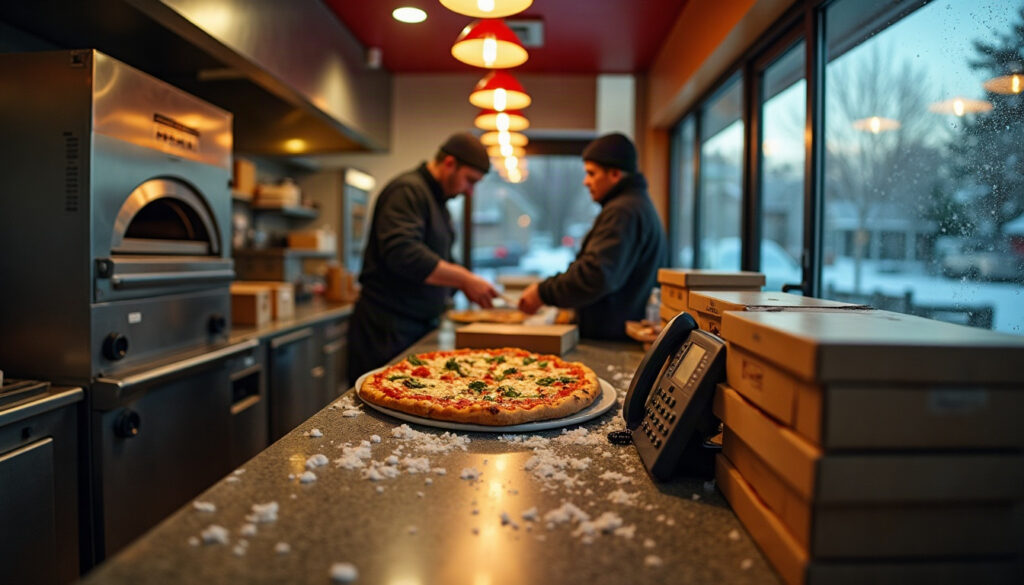
Restaurant phone calls can represent valuable sales opportunities, but answering every call during a busy lunch or dinner rush is not always possible. Employees may be preparing food, serving guests, processing payments, or managing orders while customers wait on hold or reach voicemail.
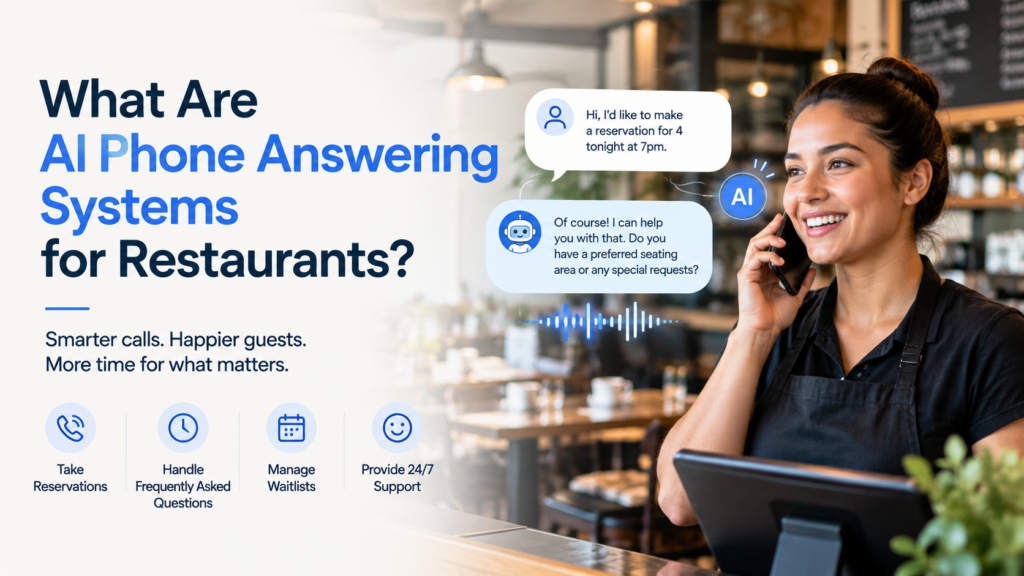
AI phone ordering systems help restaurants manage this challenge by using conversational voice technology to answer calls, understand customer requests, and guide callers through the ordering process. Depending on the solution, these systems can also answer menu questions, support reservations, recommend add-ons, and connect orders with existing restaurant technology.
For restaurants looking to reduce missed calls, improve customer service, and make better use of staff time, AI phone ordering is becoming an increasingly practical option.
This guide explores how AI phone ordering systems work, which features matter most, and several solutions worth considering.
Choose an AI phone ordering system that can handle your restaurant’s actual call volume, menu complexity, and ordering workflow.
Prioritize systems that can take orders, confirm modifications, and connect with your POS or online ordering platform.
Look for reliable call handling during peak hours, after closing, on weekends, and during holidays.
Consider whether the system can answer menu questions, explain promotions, support multiple languages, and route complex requests to staff.
Evaluate AI upselling features that can suggest relevant add-ons and combinations without making conversations feel unnatural.
Check whether the platform supports pickup, delivery, reservations, or other workflows your restaurant needs.
Review missed-call recovery features, including automated text messages that direct customers to online ordering or reservations.
Compare integration requirements, setup effort, subscription fees, and usage-based charges before committing.
Test the system using real menu items, modifiers, dietary questions, accents, background noise, and order changes.
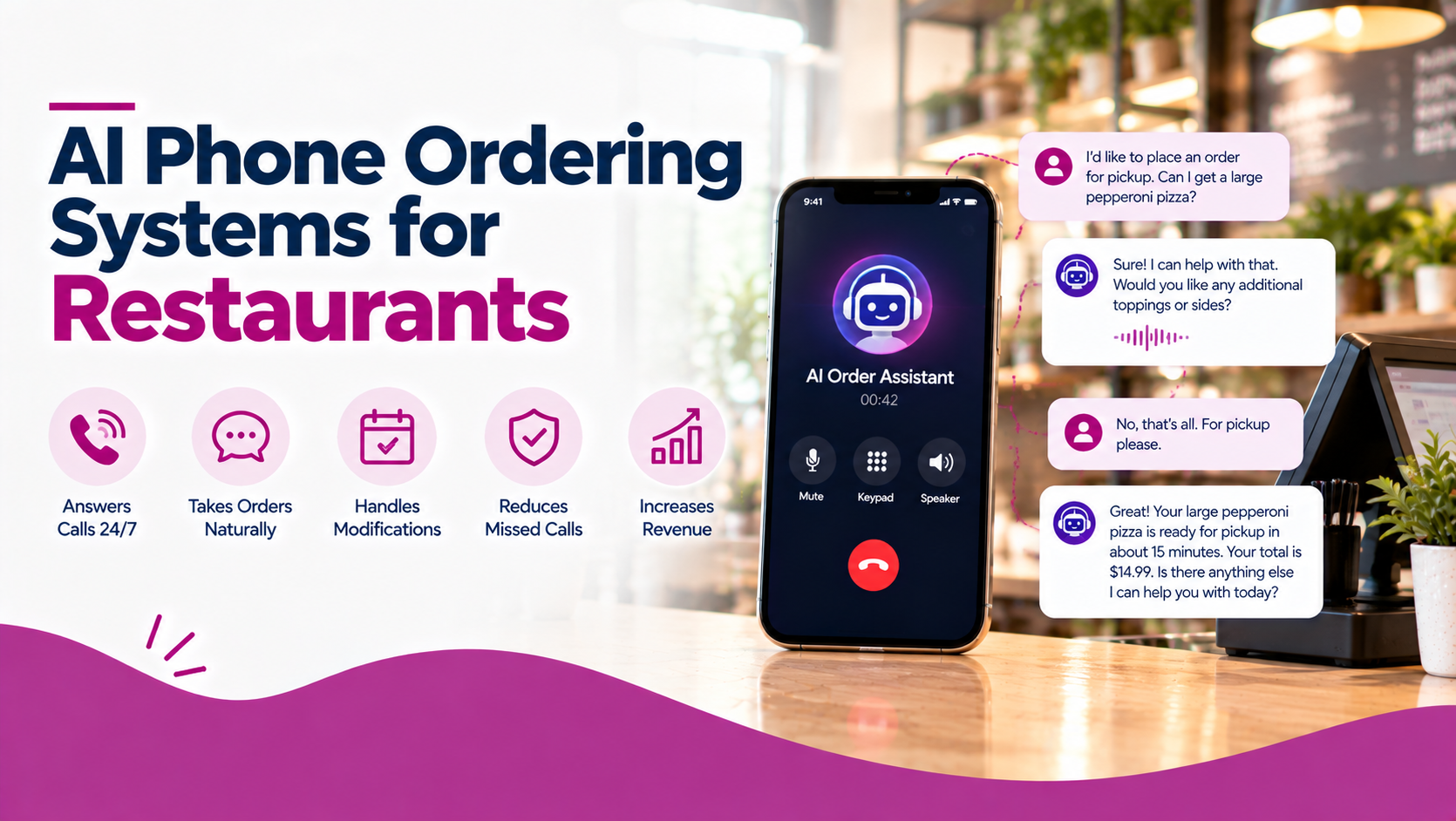
An AI phone ordering system uses artificial intelligence and conversational voice technology to handle incoming restaurant calls. Instead of requiring an employee to answer every call, the system can interact with customers, identify what they need, and guide them through supported tasks.
For phone ordering, this can mean helping a customer choose menu items, select sizes or toppings, specify pickup details, and confirm an order. Depending on the platform and integrations, the completed order can be sent into the restaurant’s ordering workflow.
Some solutions focus specifically on taking food orders. Others primarily answer questions and manage reservations, while more comprehensive platforms combine several functions.
Typical capabilities include:
The exact capabilities vary considerably. Restaurants should distinguish a system that simply answers questions from one that can complete an order and send it into the restaurant’s workflow.
1. Capture More Orders
A missed call can mean a customer gives up, places an order elsewhere, or chooses a competitor that answers faster.
AI phone ordering helps restaurants respond to more callers, including during periods when employees are occupied with in-person service. Systems that support concurrent calls can also help avoid placing callers in a long queue.
The potential benefit is especially relevant for pizza shops, takeout restaurants, quick-service restaurants, and other businesses that receive a high volume of telephone orders.
2. Reduce Staff Interruptions
Phone calls can interrupt employees while they are preparing food, packing takeout orders, serving tables, or handling payments.
An AI voice agent can handle supported calls independently, allowing employees to focus on tasks that require physical presence or personal attention.
The goal is not necessarily to replace employees. It is to reduce repetitive interruptions and help the existing team serve customers more efficiently.
3. Provide Consistent Service Outside Regular Hours
Customers may call before opening, after closing, or during holidays. Depending on its configuration, an AI phone ordering system can answer calls during these periods, provide business information, and guide customers through supported ordering or reservation workflows.
Restaurants should verify which functions remain available outside operating hours and whether orders can be scheduled for a future pickup time.
4. Create Additional Upselling Opportunities
An employee handling several tasks may not always have time to suggest an extra drink, side, dessert, or meal upgrade.
AI ordering systems can be configured to recommend relevant items during a conversation. However, restaurants should test whether recommendations fit the menu, respect customer choices, and avoid making the ordering experience unnecessarily long.
5. Improve Call Handling Across Locations
For restaurant groups, managing phone service consistently across several locations can be difficult. A suitable platform can help standardize greetings, menu information, and call workflows while allowing each location to maintain its own hours and offerings.
Multi-location operators should verify how the system handles location selection, different menus, location-specific pricing, and reporting.
Not all voice AI solutions are designed for the same job. Before choosing one, consider the following capabilities.
Restaurant-Specific Menu Understanding
The system should understand your menu, including item names, sizes, modifiers, combos, substitutions, and availability. It should also respond appropriately when customers change their minds or ask questions about ingredients.
Test unusual requests and complex orders instead of relying exclusively on a standard demonstration.
Direct Ordering Integration
Determine where completed orders go. An effective integration can reduce manual re-entry and help prevent orders from being lost between the phone conversation and the kitchen.
Ask whether the solution integrates with your current POS, online ordering platform, kitchen display system, and payment workflow. Some providers require particular integrations or additional products to complete the process.
Natural Conversations and Order Accuracy
Customers should be able to speak naturally rather than memorize exact phrases. The system should recognize corrections, clarify ambiguous requests, and confirm important details.
Ask the vendor how order accuracy is measured and whether you can review call recordings, transcripts, and completed orders.
Human Handoff and Call Routing
Some callers will have complex requests, complaints, catering inquiries, or questions that require judgment. The system should provide a clear path to a staff member when appropriate.
Check whether callers can request a person and whether transfers work during the hours your restaurant is open.
Multilingual Support
Restaurants serving multilingual communities may need an AI agent that can understand and respond in multiple languages. Verify support for the languages your guests actually use, including menu terminology and regional accents.
Reporting and Performance Tracking
Look for reporting that helps managers understand call volume, missed calls, completed orders, call outcomes, and common customer questions.
These metrics help determine whether the system is improving the guest experience and contributing to operational efficiency.
| Feature to Look For | Snappy Voice Agent | SoundHound AI | ConverseNow | Slang AI |
|---|---|---|---|---|
| 24/7 Call Answering | Yes | Available; confirm solution setup | Yes | Yes |
| AI Phone Order Taking | Yes; order flow depends on configuration | Yes | Core capability | Primarily phone answering and reservations; confirm food-ordering support |
| Menu and Custom Call Flows | Custom flows tailored to menu and hours | Brand and menu customization | Customizable menus and workflows | Restaurant-specific information and custom greetings |
| POS and Ordering Integration | Direct POS syncing described by Snappy; confirm compatibility | POS and menu integrations | Integration partners available | Integrations available; confirm ordering workflow |
| Upselling and Add-on Suggestions | AI upselling available across Snappy ordering workflows; confirm phone flow | Intelligent upselling | Configurable upsell logic | Guest and reservation-focused; confirm food-order upselling |
| Multilingual Support | Yes | Yes | Yes | Yes; supports multiple languages |
| Call Transfer and Staff Escalation | Routes callers to staff on request | Escalation options; confirm configuration | Confirm staff handoff options | Flexible call routing |
| Handling Busy Periods and Concurrent Calls | Peak-hour support and concurrent call taking | Designed to scale across restaurant channels | 24/7 voice ordering; validate capacity for your volume | 24/7 call answering; validate capacity for your volume |
| Reporting and Call Insights | Caller data and reporting | Voice and operational insights | AI insights and performance analytics | Call summaries, transcripts, and performance insights |
| Reservations and Guest Questions | Yes | Guest answering features available; confirm reservation workflow | Primarily ordering-focused; confirm reservation support | Yes; a core focus |
Best for: Restaurants looking to combine AI phone answering with ordering, reservations, and connected restaurant workflows.
Snappy Voice Agent is designed specifically for restaurant phone interactions. It helps restaurants answer incoming calls, handle supported ordering and reservation requests, answer guest questions, and route callers to staff when human assistance is needed.
The system supports 24/7 call handling, multilingual service, automated responses, and workflows for orders and reservations. Its missed-call features can also help direct customers toward online ordering or reservations by text.
Key features include:
One consideration is how the voice agent connects with the rest of the ordering process. Snappy’s broader restaurant platform includes POS, online ordering, reservations, and other operational tools.
Restaurants should confirm which integrations and ordering features are included in their chosen configuration.
Why consider Snappy? It may be a good fit for restaurants that want more than an automated receptionist. Its approach combines phone interactions with ordering and reservation workflows, potentially reducing missed opportunities and repetitive staff work.
Learn more: Snappy Voice Agent.
Best for: Restaurants and restaurant chains seeking voice ordering across phone, drive-thru, and other ordering channels.
SoundHound AI offers restaurant voice technology, including Smart Ordering and Smart Answering, as well as broader voice-based solutions for quick-service restaurants.
Its restaurant platform supports conversational ordering and customer interactions across channels. Depending on the solution, it can answer common questions, take phone orders, support upselling, and integrate with existing POS and restaurant systems.
Key capabilities include:
SoundHound may be particularly relevant to quick-service restaurants and larger chains that need voice automation across multiple locations or ordering channels. Smaller independent restaurants should confirm implementation requirements, supported integrations, and pricing before deciding whether it is the right fit.
Best for: Quick-service restaurants and restaurant brands that want specialized voice ordering at scale.
ConverseNow provides AI voice ordering solutions designed for restaurant operations. Its products support phone ordering and drive-thru use cases, with customization options for brand voice, menu workflows, upselling, and localization.
Relevant capabilities include:
ConverseNow may be worth evaluating for brands with high order volumes and standardized menus, particularly when phone ordering is one part of a broader voice automation strategy.
Before selecting it, confirm which POS integrations are supported, how order exceptions are handled, and what implementation is required for each location.
Best for: Full-service restaurants that need AI phone answering and reservation management.
Slang AI focuses on restaurant phone automation, particularly guest inquiries, reservations, and call routing. It is not the same type of solution as a dedicated AI food-ordering system, so restaurants should assess whether its capabilities match their ordering needs.
Its published features include:
Slang AI may be a strong candidate for full-service restaurants where phone traffic is dominated by reservation requests, questions about policies, and other guest-service needs.
For takeout-heavy restaurants, confirm whether the specific ordering workflow required is supported before comparing it directly with phone-ordering products.
Start With Your Call Volume and Business Model
A pizza restaurant receiving dozens of takeout calls during dinner may need a system optimized for complex food orders and high concurrent call volume. A full-service restaurant may receive more reservation requests and questions about private events. Choose a solution based on the types of calls your restaurant actually receives.
Confirm How Orders Reach the Kitchen
Ask the vendor to demonstrate the complete workflow, from the first spoken request to the final order appearing in the restaurant’s system.
Check how the AI handles modifiers, unavailable items, order changes, pickup times, and payment. If staff must manually re-enter most orders, the system may not deliver the efficiency you expect.
Test It With Your Actual Menu
Run real-world tests using your menu, including popular combinations, uncommon item names, special requests, and dietary questions. Include different accents and background noise.
Review the transcripts and completed orders, not just the vendor’s demonstration. A convincing conversation is not enough if the resulting order is wrong.
Compare Total Costs
Review setup fees, monthly subscriptions, included usage, per-call or per-minute charges, integration fees, and support costs.
Estimate the cost per completed order and compare it with the value of calls answered, staff time saved, and additional orders captured. Do not assume that every answered call becomes a sale.
The cost of switching POS systems is one of the most underestimated decisions in restaurants. The headline quote typically represents less than half the real cost. The rest is buried in manager hours, training time, revenue loss during cutover, and integrations no one priced on day one.
POS is the operational nervous system of a restaurant. Switching it is an operations project, not a procurement decision. Treat it with the rigour of opening a new location, and the payback case becomes real.
It is a conversational AI system that answers restaurant phone calls and helps customers complete supported tasks, such as placing food orders or asking menu questions. Some platforms also support reservations, text follow-ups, and call transfers.
Yes. Dedicated AI phone-ordering systems can guide customers through menu selections, modifiers, and order confirmation. Depending on the provider and integration, orders can be sent into the restaurant’s POS or ordering workflow.
Some systems support concurrent calls, allowing them to respond to multiple customers without putting every caller in a traditional phone queue. Confirm the provider’s capacity, usage limits, and performance under your expected call volume.
Many providers offer after-hours answering. Whether customers can place complete orders, schedule pickups, or make reservations outside business hours depends on the platform and restaurant configuration.