
July 31st, 2026
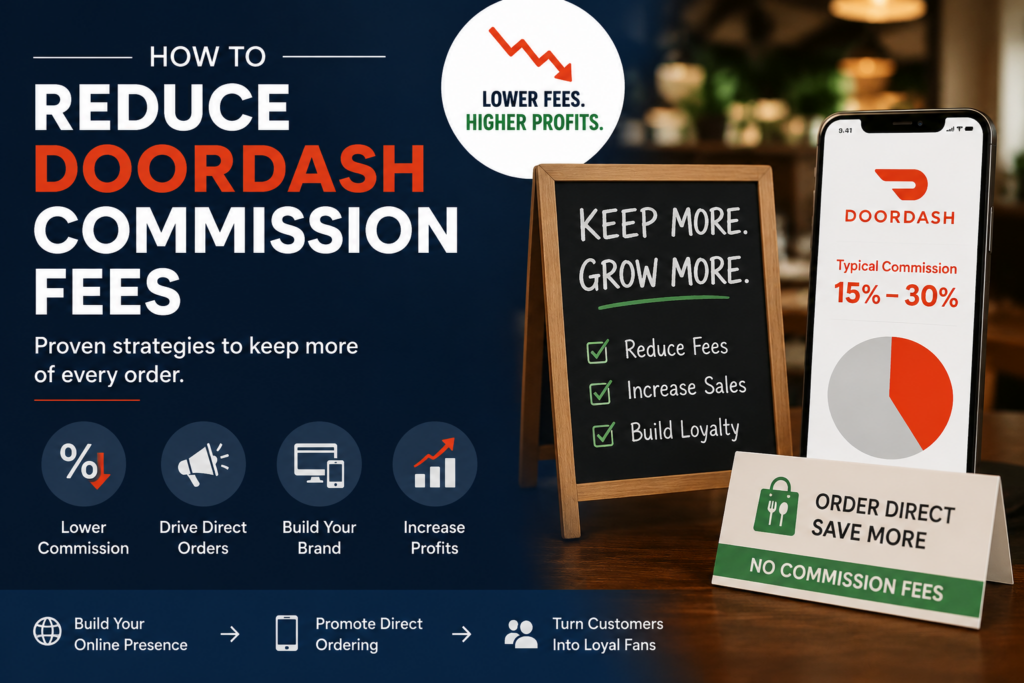
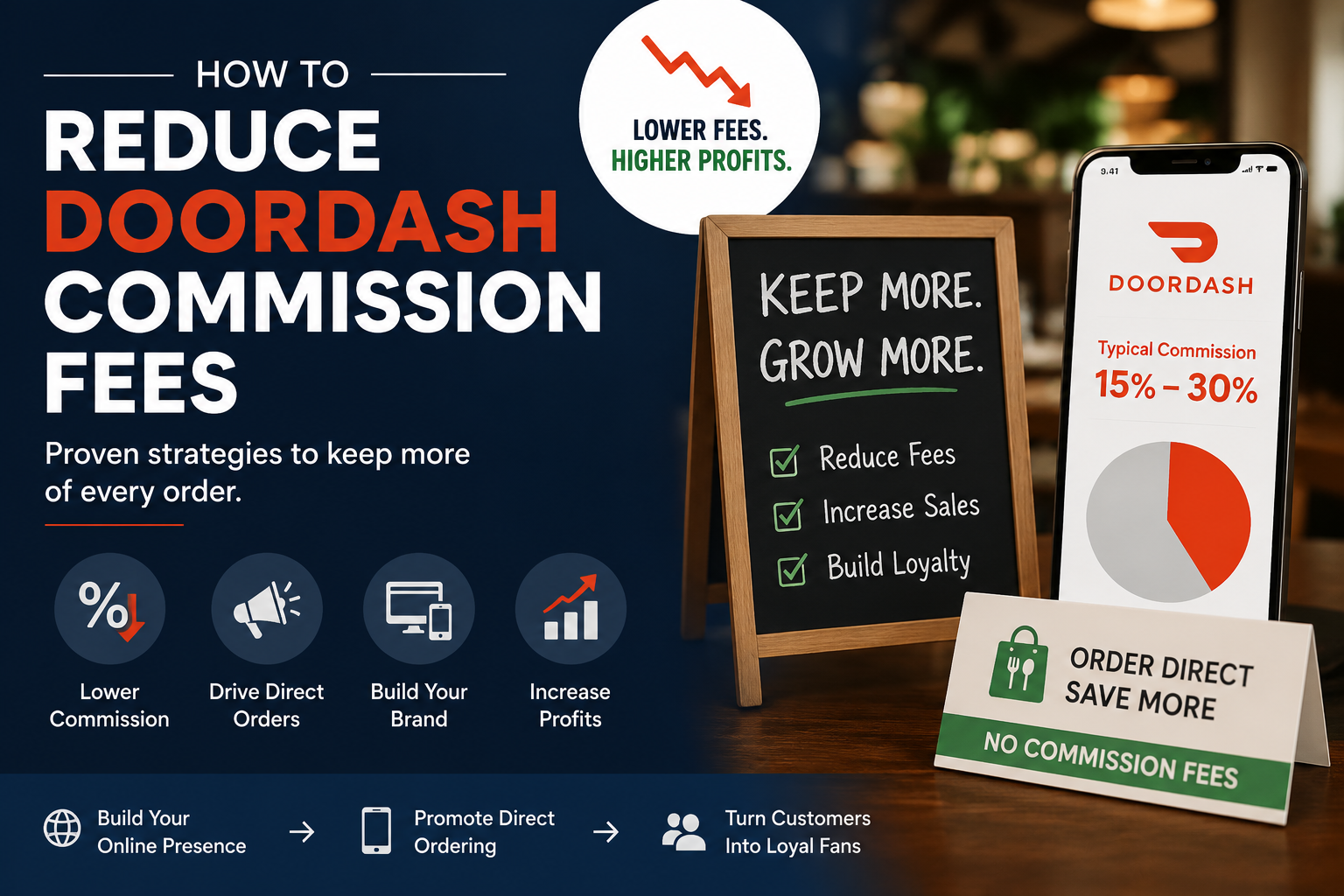
DoorDash connects restaurants with a massive base of hungry customers, but that reach comes at a cost. Marketplace delivery commission runs 15% on the Basic plan, 25% on Plus, and 30% on Premier, charged as a percentage of the order subtotal rather than a flat fee. Pickup orders are charged at a flat 6% across all three plans.
The commission line is rarely the full story, either. On top of it, restaurants typically pay standard payment processing of around 2.9%–3.0% per order, and many operators find their real cost per order lands closer to 30%-40% of revenue once promotions and ad spend are added in. On a restaurant doing $50,000 a month through DoorDash’s Plus plan, that’s $12,500 in commission alone before anything else is counted. For an industry that runs on 3%–5% net margins, that can erase profitability on every order that goes through the platform.
The good news is that DoorDash doesn’t have to be all-or-nothing. Restaurants can lower their effective commission cost through smarter plan selection and a few operational habits, and reduce their dependence on it altogether by building a direct ordering channel that captures repeat customers commission-free.
1. Choose the lowest tier your visibility needs allow
Basic makes sense if you’re testing delivery demand or want the lowest possible commission in a limited area. Plus can be worth the extra cost if DashPass customers and a wider delivery radius genuinely move the needle. Premier’s 30% rate needs to be weighed carefully against your margins, the widest reach doesn’t help if it isn’t converting into profitable volume. Match the tier to what you can prove is working, not to what looks like the most marketing.
2. Use pickup and self-delivery where it makes sense
DoorDash pickup orders are charged at just 6%, a fraction of the delivery commission. If a meaningful share of your customers are willing to pick up, a small incentive to nudge them that direction can noticeably lower your blended commission rate. A separate self-delivery option is also available typically around a 6% rate as well, though DoorDash’s merchant flow tends to steer operators toward the higher delivery tiers by default.
3. Check whether you qualify for a commission refund
DoorDash offers a monthly delivery commission refund for restaurants that accept fewer than 20 orders, cancel fewer than five, and stay open on the platform for at least 90% of their listed hours. It’s a narrow window aimed mostly at newer or lower-volume partners, but it’s worth checking your monthly numbers against it.
4. Negotiate if you have volume or run multiple locations
Restaurants with meaningful order volume, multiple locations, or the leverage of an exclusive promotion can sometimes negotiate a lower base commission or secure marketing credits directly with their account manager. Results vary by market and timing, but it costs nothing to ask, especially if you’re weighing whether to reduce your tier or drop the platform.
5. Reconcile every payout against your own sales data
Someone on your team still has to match DoorDash payouts against your POS sales by hand, and that reconciliation gap is where many multi-app restaurants quietly lose the most time and money. Commission miscalculations and disputed refunds happen more often than operators expect. Checking payouts regularly against your own numbers can catch overcharges before they become a habit.
6. Move repeat customers off the marketplace entirely
This is the highest-leverage change available. The marketplace earns its commission when a customer was already browsing DoorDash and wouldn’t have found your restaurant otherwise, the fee functions like a customer-acquisition cost. But once a guest already knows you, the marketplace isn’t doing the hard part anymore, and that order should be routed to your own website, app, loyalty program, or pickup channel instead. You can still fulfill it with pickup, your own drivers, or a delivery network without paying a 15%–30% cut on a customer you already earned.
Simple ways to start making this shift: include an “Order Direct Next Time” card in every delivery bag, offer a discount code to first-time delivery-app customers you’re able to identify, and make sure your own ordering link is the first thing people see on your website, Google Business Profile, and social channels.
Reducing DoorDash’s cost only goes so far while every direct order still has to pass through a marketplace. The next step for many restaurants is building a commission-free ordering channel of their own. Here’s how the leading options compare:
Snappy Online Ordering: A commission-free ordering system built to sit alongside your POS, kitchen display, loyalty, and delivery integrations, so repeat customers order direct instead of through a marketplace. Covered in detail below.
ChowNow: An established commission-free ordering platform with its own diner discovery network and email marketing tools, well suited to independent restaurants that mainly want direct ordering without a broader operations platform.
Owner.com: Bundles an AI-built restaurant website with commission-free ordering, a branded app, and automated SEO pages, aimed at restaurants that need their website rebuilt at the same time.
Toast Online Ordering: A natural fit for restaurants already running Toast POS, since ordering, kitchen display, and reporting share the same backend.
Square Online: A free or low-cost way for small restaurants, cafes, and food trucks already using Square to start taking direct orders with minimal setup.
Who it’s for: Restaurants that want to stop paying marketplace commission on repeat customers, without giving up delivery entirely or adding a disconnected new tool to manage.
Snappy Online Ordering & Delivery is built specifically to replace the DoorDash orders that don’t need to go through DoorDash, the customers who already know your restaurant and would happily order direct if it were just as easy. Instead of paying 15%–30% commission on those repeat orders, Snappy gives restaurants their own commission-free channel, while still integrating with third-party delivery networks for fulfillment when it’s needed.
What Snappy offers:
| DoorDash Marketplace | Snappy Online Ordering | |
|---|---|---|
| Commission on delivery orders | 15%–30% depending on tier | 0% |
| Commission on pickup orders | 6% | 0% |
| Payment processing | ~2.9%–3.0% added on top | Included |
| Own the customer data | No | Yes |
| Delivery fulfillment options | DoorDash Dashers | Uber Eats, DoorDash, SkipTheDishes, Fantuan integrations |
| Built-in loyalty & marketing | No | Yes |
| Order from Google Search/Maps | Limited | Yes |
| Best for | New customer discovery | Repeat customers & direct revenue |
The goal isn’t necessarily to drop DoorDash entirely, for many restaurants, it still plays a role in discovery. The goal is to stop paying full marketplace commission on customers who already know your restaurant.
DoorDash’s commission structure isn’t going away, and for many restaurants it still serves a purpose as a customer-acquisition channel. But the strategic win is owning the order and the customer relationship once that customer already knows you.
Start by right-sizing your DoorDash tier, pushing pickup where it makes sense, checking for refund eligibility, and reconciling your payouts. Then build the direct channel that captures repeat orders without a 15%–30% cut going to a marketplace. For restaurants ready to make that shift, Snappy Online Ordering & Delivery offers a commission-free way to keep taking direct orders while still using delivery networks for fulfillment when needed.
DoorDash charges 15% on the Basic plan, 25% on Plus, and 30% on Premier for Marketplace delivery orders, with pickup charged at a flat 6% across all plans. Standard payment processing of roughly 2.9%–3.0% is added on top of the commission.
High-volume restaurants, multi-location groups, or partners offering an exclusive promotion can sometimes negotiate a lower base commission or secure marketing credits. Results vary by market and timing, but it’s worth asking your account manager directly.
The commission is the advertised percentage DoorDash charges per order. The effective cost includes that commission plus payment processing and any promotions or ads layered on top, which commonly pushes the real cost to 30%–40% of the order total.