
Wilson Wu
Chief Revenue Officer, Snappy
October 31, 2026·18 min read
Interac debit is priced per transaction, not as a percentage of the ticket, because Interac sets interchange on standard Interac Debit at zero and charges acquirers a flat wholesale switch fee of $0.013985 per transaction (Interac). Almost everything you pay above that is your processor’s markup. That is why two restaurants running identical debit volume can pay very different amounts for it.
For a restaurant, this matters more than it sounds. Debit made up 30 per cent of Canadian payment transactions in 2024 by count, and credit cards 33 per cent, and in 2024 credit cards tied with debit at the point of sale for the first time ever (Payments Canada).
Across all payment methods that is nearly a third of every transaction Canadians make; at a restaurant counter, where the choice is realistically cash, debit or credit, debit’s share of card transactions runs higher still. Whether you actually get that discount depends on how your statement is structured.
Summary
On this page
A credit card transaction and an Interac debit transaction cost you money for completely different reasons: credit interchange is a percentage of the ticket, while Interac’s wholesale cost is a flat fraction of a cent per transaction. Confusing the two is the most common mistake on a restaurant statement.
On a credit card, the largest single component is interchange, which the issuing bank keeps. It is quoted as a percentage of the ticket, so a $90 table costs about three times what a $30 table costs. Your processor adds network assessments and its own markup on top.
Interac works the other way around. Interac states that “Interchange for Interac Debit is currently set at zero,” and its own wholesale charge is a flat $0.013985 per transaction, called the switch fee on chip and PIN and card contactless and the mobile service fee on mobile contactless, moving to $0.014438 on November 1, 2026 (Interac).
Contactless carries a small interchange of its own, tiered by merchant category and annual volume: $0.020 for a short list of low-ticket categories that includes fast food and caterers, $0.025 for merchants clearing 20 million contactless transactions a year, and $0.035 for everyone else, on tickets from $0.01 to $100.00, rising to $0.055 from $100.01 to $250.00 (Interac). A full-service restaurant almost always sits in the $0.035 tier.
Add those together and the wholesale cost of an in-store Interac tap is under five cents on most restaurant tickets. Interac is explicit about who sets the rest: “Merchants pay a processing fee to the POS Acquirers that provide connection services to the Interac network,” and that fee “varies depending on individual contracts” (Interac).
That is the whole point. Your Interac bill is dominated by negotiated markup, not by a pass-through cost, so a percentage-based Interac rate is a pricing decision your processor made rather than a cost it is recovering.
One more mechanic matters for a dining room. Interac Debit pulls “real-time payment from the cardholder’s account” using EMV chip processing, the card must be present at the point of sale, and a single card-based contactless transaction cannot exceed $250 (Interac). Large tables fall back to chip and PIN, which is fine and usually cheaper.
A fair Interac rate for a restaurant is quoted in flat cents, in the low double digits, per transaction, not as a percentage of the ticket. Ask three Canadian processors for a debit rate and you will usually get a quote request instead of a published number, and the figure you eventually get is a markup on a product that costs them pennies. Instead of chasing list prices, anchor on the two public reference points worth memorizing.
The first is the wholesale cost above: under one and a half cents of switch fee that goes to Interac, plus zero interchange on chip and PIN and a few cents of contactless interchange that your acquirer pays to the cardholder’s bank (Interac). In a 2014 release Interac said a merchant pays “around $0.06 per transaction to its payment processor” and described that as “a single flat fee, regardless of retail purchase price,” then contrasted it with $1.50 to $3.00 of interchange on a $100 credit card purchase (Interac, 2014). That is a dated figure, but the structure it describes has not changed.
The second is the Bank of Canada’s merchant survey. Its published analysis found “the median fee per transaction for debit cards in the survey is 12 cents, and the median discount rate for credit cards is 2 per cent of the value of the transaction” (Bank of Canada).
That survey dates from 2006, so the specific cents are stale. What has held up is the shape, which the same paper states directly: “merchants incur a set fee for every debit card transaction and a percentage fee for every credit card transaction.”
Put those together and you have a working rule. A card-present Interac rate quoted in flat cents, in the low double digits, is normal. A card-present Interac rate quoted as a percentage of the ticket is a choice your processor made, and you can decline it.
Where the rate sits depends on which kind of processor you are dealing with. Here is how the categories differ on the things that decide your debit cost.
| Processor type | How Interac is usually quoted | What to watch | Where Snappy fits |
|---|---|---|---|
| Bank-owned acquirer (the largest processors in the country) | Flat cents per transaction, with a separate card-not-present rate | Ancillary fees (statement, batch, minimums, software) can outweigh the debit line at low volume | Not Snappy |
| Independent flat-rate processor | Sometimes a percentage plus cents, the same structure as credit | A percentage on debit costs more than flat cents on nearly every restaurant ticket | Not Snappy |
| Interchange-plus processor | Interchange, plus a disclosed per-transaction markup | Because standard Interac interchange is zero, the markup is the whole price. Get it in cents | Snappy Pay includes an interchange-plus option |
| Point-of-sale vendor with processing quoted separately | Not published; processing arrives as a second contract | Two statements to reconcile, two vendors to negotiate with | Not Snappy |
| Integrated point of sale plus processing | Processing quoted with the system, so the debit line and the software line come from the same vendor | Ask for the debit line split from credit, and card-present split from online | Snappy point of sale with Snappy Pay |
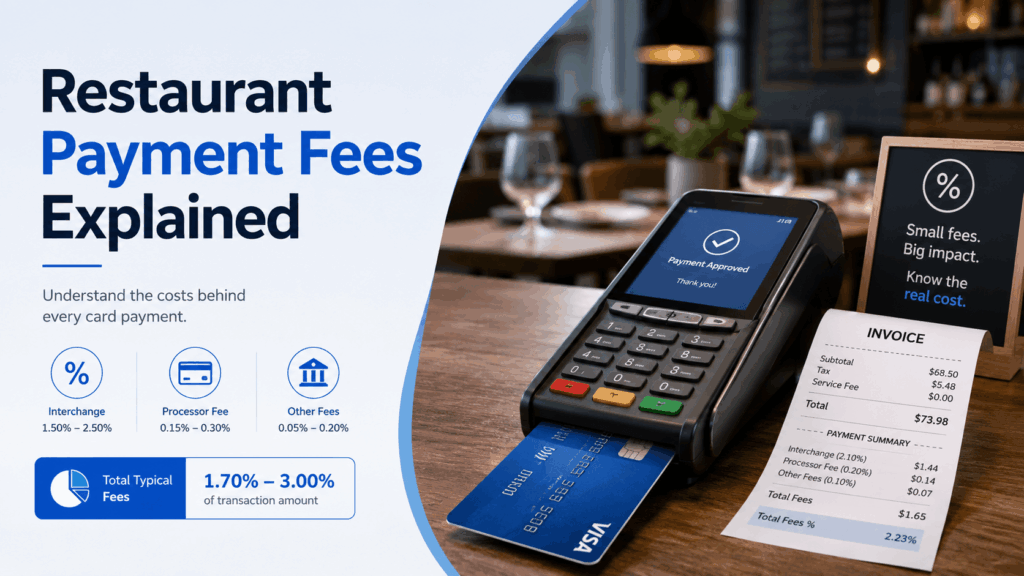
Snappy does not publish list processing rates, and this article does not quote any. Ask for a written rate sheet, from Snappy and from anyone else you are comparing. Quote-only pricing is not a red flag by itself. It simply puts the burden on you to get the number in writing, the same argument our restaurant payment fees explainer makes at length.
The gap is large because in-store and online Interac are two different products with different pricing: in-store debit carries zero standard interchange, while online debit is priced like a credit card, with interchange of 55 to 70 basis points or more depending on the schedule. The most expensive misunderstanding in Canadian restaurant payments is treating “Interac” as one product, when the online side alone carries more than one fee schedule.
In-store Interac Debit is a card-present rail. Chip, PIN or tap, card physically at the terminal, funds pulled in real time (Interac). Interchange is zero on standard transactions and pennies on contactless.
Online debit is a different product, and it is priced like a card. Interac publishes more than one online debit schedule. Interac Direct carries interchange of 55 to 70 basis points per completed transaction plus a 10 basis point brand fee. A restaurant taking Interac Debit on its own site or in its own app, through a mobile wallet, sits on Interac’s separate eCommerce schedule instead: default interchange of 60 basis points, capped at $1.80 once the ticket reaches $300, plus a $0.013985 issuer switch fee and a $0.025 acquirer service fee (Interac). Interac notes the applicable rate is subject to qualifying criteria and can vary by merchant setup and category, so confirm yours with your acquirer. On a $45 online order that eCommerce schedule works out to about 31 cents: 0.0060 x $45 = $0.27 of interchange, plus $0.013985 + $0.025 = about 4 cents of switch and service fees, all before your processor’s markup, against under five cents of wholesale cost in store.
Processors price that gap through. Expect the card-not-present Interac line on any Canadian rate sheet to be a multiple of the card-present line, not a few cents more, because the processor is now covering percentage interchange, and on Interac Direct a percentage brand fee too, inside a per-transaction quote.
So what should an operator actually do about it? Three things follow.
Your dine-in and counter volume is your cheap volume. Kiosk, terminal and tableside transactions all clear on the card-present rail, so pushing guests toward self-serve ordering that still ends at a physical terminal does not cost you the debit discount.
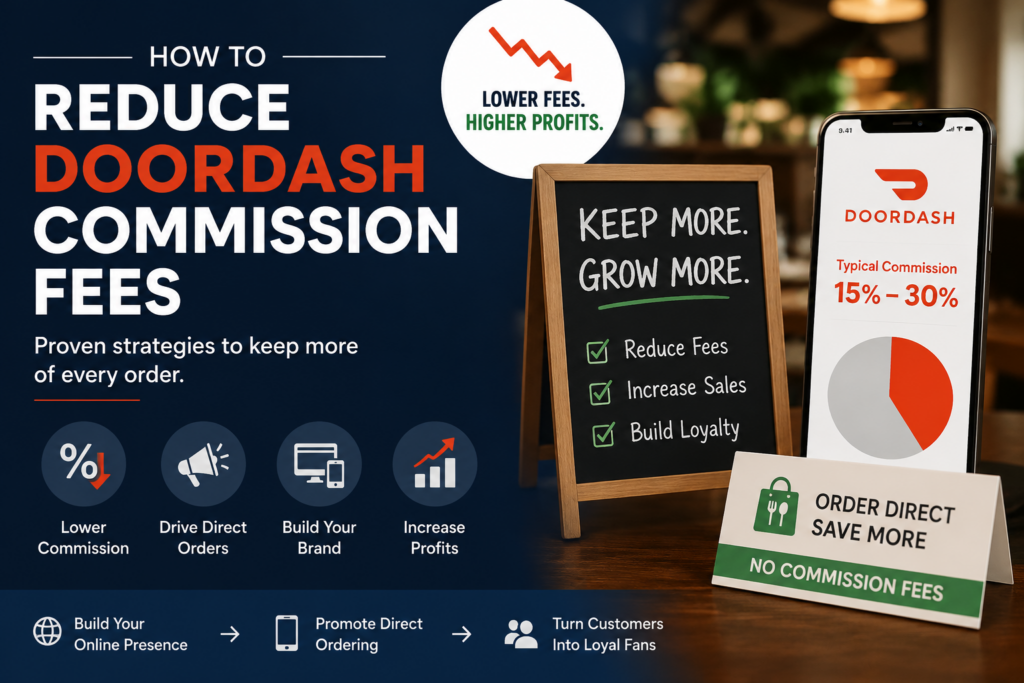
Your online channel is where the payment mix actually costs you. Look at total cost per online order rather than processing alone. A marketplace commission dwarfs any debit line item, which is why commission-free direct ordering outweighs rate shopping as a margin lever.
Refuse a blended rate. A single “effective rate” across both channels tells you nothing you can act on.
Is your debit line flat cents or a percentage?
Pull last month's statement, divide your debit cost by your debit count, and bring that number to a walkthrough built around your own numbers.
Show me my debit lineYour effective rate is the blend of how much of your card volume runs on debit, priced in flat cents, versus credit, priced as a percentage of the ticket. Here is the arithmetic: assume a restaurant running 4,000 card transactions a month at a $32 average ticket, or $128,000 in card volume, with 40% of those transactions on Interac: 1,600 transactions worth $51,200.
The 40% is a modelling assumption, not a statistic. Payments Canada’s national split of 33 per cent credit and 30 per cent debit implies debit is about 48 per cent of card transactions (30 / (33 + 30) = 0.48), so 40% sits deliberately below that (Payments Canada). Replace it with your own count as soon as you have one.
Now plug in your own quoted debit rate. The formula is simple:
The gap between the wholesale floor and your quoted rate is your processor’s margin on debit. That is the number you are negotiating.
The crossover point is worth committing to memory. A percentage-based debit rate equals a flat rate at a ticket of flat cents divided by the percentage. A 12 cent flat fee and a 1% rate meet at $12; below that ticket the percentage wins, above it the flat fee wins, and any per-item cents the percentage plan adds move the crossover lower still. Since almost no restaurant runs an average debit ticket under $12, the practical rule is simple: on debit, flat beats percentage for nearly every restaurant.
This is not a rounding error in the current climate for restaurant margins. Restaurants Canada reports that 41% of foodservice businesses are currently operating at a loss or just breaking even, compared to 12% five years ago, and 46% of restaurant operators expect profitability to worsen in 2026 (Restaurants Canada).
Should your restaurant be on flat rate or interchange plus? Flat rate bundles interchange, network assessments and your processor’s markup into one published number, while interchange plus unbundles them and shows the markup separately, usually as a percentage plus cents on credit and as cents on debit.
On credit cards the usual pattern holds: interchange plus tends to win as volume rises, because a fixed markup on a growing base beats a fixed percentage. The base itself moved recently. CFIB reports that “lower credit card fees for small business took effect on October 19, 2024,” with Visa rates expected to “drop between 25-35% (savings of $300-400 per $100,000 in transactions)” and Mastercard rates to “drop around 20% (savings of $200 per $100,000 in transactions)” for businesses with up to $300,000 in annual Visa sales and up to $175,000 in annual Mastercard sales (CFIB). CFIB’s French page states the same savings per $100,000 in sales. On a flat-rate plan, that interchange cut lands in your processor’s margin unless your rate was repriced. On interchange plus, it lands in yours.
On Interac the logic is different, and better. Because standard Interac interchange is zero, an interchange-plus debit line is essentially pure markup, quoted per transaction, with nothing underneath it to surprise you. Ask for it as a cents figure and refuse a percentage.
Two cautions. Markups move, and the federal Code of Conduct for the Payment Card Industry now governs how. Acquirers “must notify their merchants between 30 and 60 calendar days prior to the effective date” of a new or increased fee, and merchants “can cancel their agreements without any form of penalty, within 70 calendar days after the effective date” of that increase (Government of Canada). A fee notice is therefore a negotiating window, not a formality. And ancillary fees can quietly outweigh the rate you negotiated: chargeback fees, software fees, batch fees, paper statement fees and monthly minimums are all common on Canadian rate sheets, and none of them shows up in a headline debit rate.
Surcharging comes up in every version of this conversation, so state the boundary clearly. CFIB reports that “starting October 6, 2022, businesses will be able to charge an additional fee at the point of sale if a customer wishes to pay by credit card,” that “surcharges are capped at 2.4% or the amount it costs you to accept those credit cards, whichever is less,” and that you must notify your acquirer “at least 30 days before surcharging” (CFIB).
The federal regulator confirms the 2.4% cap and that the option exists “except in Quebec” (FCAC). Debit is governed separately.
CFIB says the ability to add a fee to Interac debit transactions “has been and continues to be available to merchants,” while the FCAC advises that “some networks don’t allow merchants to do so” and tells you to contact your payment processor first (CFIB, FCAC). Interac itself sets tighter limits than the credit rules: any Interac Debit surcharge is capped at $0.25, must be applied by your acquirer rather than by you directly, must be printed on the transaction record, and the guest must be able to cancel the transaction without cost (Interac).
Provincial consumer protection law varies, and we are not lawyers. Confirm with your acquirer and legal counsel before adding a cent to any guest’s bill.
Not sure where to start reading your own statement? Pull the last three statements and work through six checks. This takes about twenty minutes, and it is the highest-return twenty minutes available to most independents.
1. Find the Interac line and identify its shape. Flat cents or a percentage. If it is a percentage, you now know it is a pricing choice rather than a pass-through, and you have a number to negotiate against.
2. Divide total Interac cost by Interac transaction count. That is your real cost per debit transaction. Compare it to the wholesale floor: under one and a half cents of Interac switch fee, plus a few cents of tap interchange paid to the cardholder’s bank (Interac). Everything above that is margin, and margin is negotiable.
3. Separate card-present from card-not-present Interac. If they are blended into one line, ask for them split. Online debit carries percentage interchange that in-store debit does not: 55 to 70 basis points plus a 10 basis point brand fee on Interac Direct, and a default 60 basis points plus a $0.025 acquirer service fee on Interac’s in-app and in-browser eCommerce schedule (Interac), so a blended number hides which channel is actually costing you.
4. Add up everything that is not a transaction fee. Chargeback fees, software fees, statement fees, batch fees, monthly minimums. On a low-volume location these can exceed the entire debit line.
5. Check what the Code of Conduct says you are owed. Your agreement must carry an information summary box with the key terms, and you must receive “the effective merchant discount rate for the aggregate of each” card type you accepted, no less than monthly (Government of Canada). If your statement does not show an effective rate per card type, ask why.
6. Confirm your terminal handles the $250 contactless ceiling gracefully. Above it, the transaction should fall back to chip and PIN rather than fail (Interac).
If the answers make you want to move, price the switch in the same conversation as the rate. Our guide to Canadian POS systems covers what to check before changing vendors, and a point of sale with integrated processing means the debit line and the software line come from the same vendor.
Underneath every quote, Interac’s own wholesale switch fee is $0.013985 per transaction and standard Interac Debit interchange is set at zero, with tap interchange of $0.020 to $0.055 depending on merchant category, annual volume and ticket size, and a full-service restaurant sitting at $0.035 on tickets up to $100. What you actually pay is that floor plus your processor’s markup, and Interac says the markup “varies depending on individual contracts.” A card-present rate quoted in flat cents is normal; a card-present rate quoted as a percentage is a pricing choice you can push back on.
Because online debit is a different product and is priced as a percentage. In-store Interac Debit is a card-present rail with zero standard interchange. Online, Interac publishes more than one schedule: Interac Direct carries interchange of 55 to 70 basis points plus a 10 basis point brand fee, while Interac Debit taken in an app or a browser through a mobile wallet carries default interchange of 60 basis points, capped at $1.80 from $300 up, plus a $0.013985 issuer switch fee and a $0.025 acquirer service fee. Interac notes those rates depend on qualifying criteria. Processors price that through, so the card-not-present Interac line on a rate sheet is typically a multiple of the card-present line.
Almost always, and the gap widens as the ticket grows. A 12 cent flat debit fee on a $60 table is 0.2% of the sale, while a 2 per cent credit card discount rate, the median in the Bank of Canada’s 2006 merchant survey and dated but still the right shape, is $1.20 on the same table. That is why your debit-to-credit mix, not just your negotiated rate, drives your effective cost of acceptance.
Not on the same rules as credit. The credit card surcharge that took effect October 6, 2022 comes from Visa and Mastercard rules, is capped at 2.4%, requires 30 days’ notice to your acquirer and is not available in Quebec. Debit is governed by separate network rules: CFIB says a fee on Interac debit transactions has long been available to merchants, while the FCAC warns that some networks do not allow it. Interac sets tighter limits than the credit rules: an Interac Debit surcharge is capped at $0.25, must be applied by your acquirer rather than by you directly, must be printed on the transaction record, and the guest must be able to cancel the transaction without cost. Confirm with your acquirer and a lawyer before applying any surcharge.
Interac debit is structurally the cheapest way a Canadian guest can pay you, because Interac sets standard interchange at zero and charges a wholesale switch fee of under one and a half cents (Interac). Canadians ran 6.6 billion Interac Debit transactions in 2024 (Interac), and a large share of the card transactions at your counter arrives on that rail.
Capturing the discount comes down to three things: a flat per-transaction debit rate instead of a percentage, card-present and card-not-present quoted separately rather than blended, and a full accounting of the fees that are not rates. The Code of Conduct gives you the paperwork to check all three and a 70-day window to walk when a fee goes up.
If you want a straight answer on what your debit and credit mix actually costs, ask how your debit and credit is priced before you sign anything. Talk to the Snappy team.
Book a walkthrough
Read your own debit and credit lines together
Book a walkthrough on your own statement. We'll go through the debit line, the credit line and the fees that are not rates, so you know exactly what you're paying for.
By Wilson Wu. Published August 28, 2026.
Written by
Wilson Wu
Chief Revenue Officer, Snappy
Wilson Wu is Chief Revenue Officer at Snappy, the restaurant technology company, and is based in Boston. His first job was in a restaurant kitchen, and he has spent his career since at the intersection of hospitality and software, working with operators across Canada on the systems their service runs on. He also builds the technology he writes about. His engineering work includes a per-location customer service agent that answers guests with a restaurant's real hours, menu and prices, deployed with independent restaurants, and a document-extraction model that reads supplier invoices and matches invoice numbers against what is owed. He writes here about what changes on a busy service: ordering, payments, loyalty, the phone, and the Canadian rules behind them. He holds an MBA from Duke University and a Master of Science in Computer Science from Georgia Tech.
Connect on LinkedInNo-obligation walkthrough
Not sure what your debit line actually costs?
We'll read your own statement with you, line by line, and show exactly where the markup sits.
On this page
Get The Latest Restaurant Data, Trends & Tips