
July 22nd, 2026
A paper waitlist has one job and does it badly. It can’t tell a guest where they are in line, can’t text them when a table opens, and can’t tell you how many people gave up and walked out before you ever seated them.
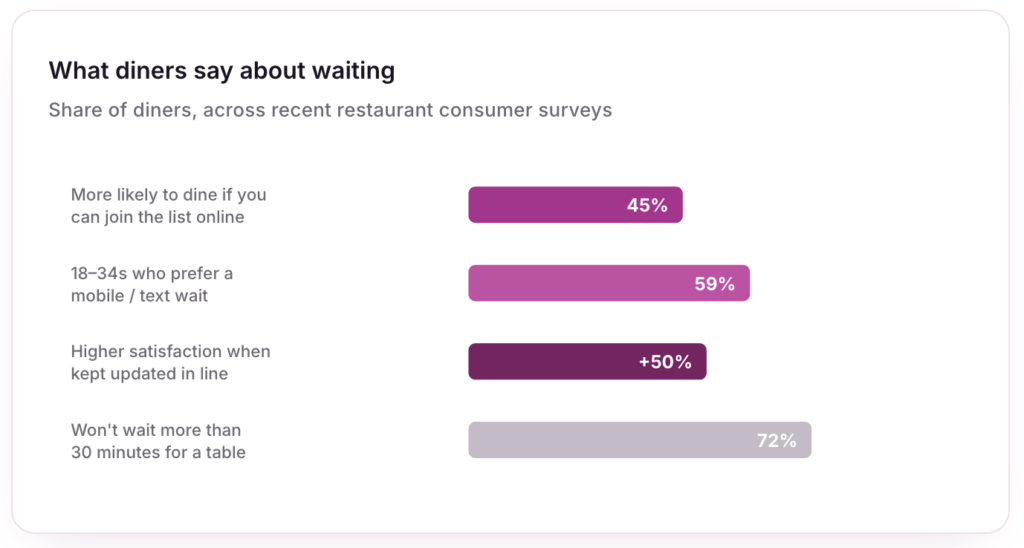
Managing walk-in guests is the single biggest front-of-house challenge most operators name, and the window to keep a waiting party is narrow: the average guest gives up after about 20 minutes, and roughly 72% won’t wait longer than 30. When waits aren’t communicated, peak-time walkout rates climb to 20–30%.
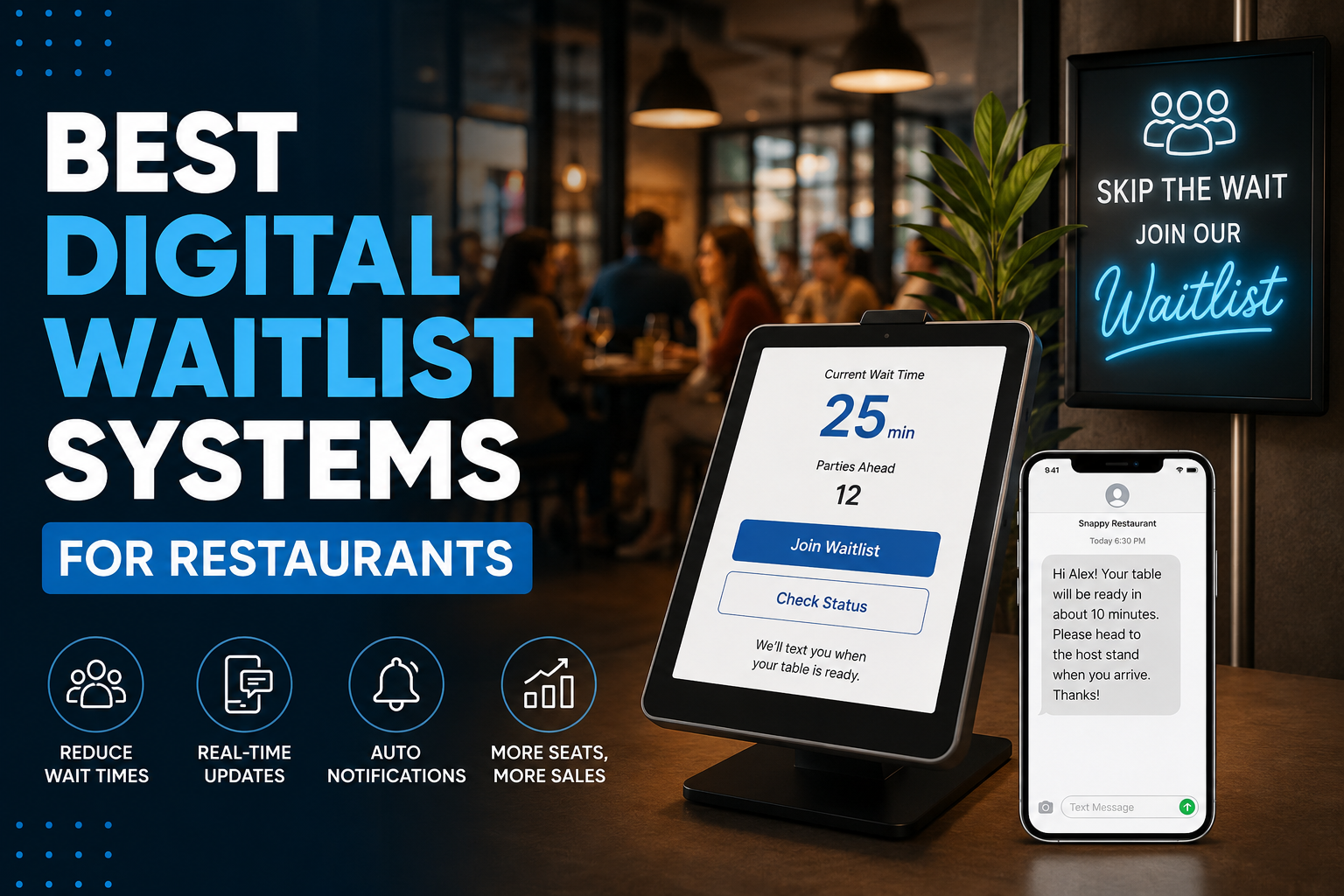
A digital waitlist attacks all of that at once. Guests check in by phone or QR code, watch their place in line move in real time, and get a text when their table is ready. Hosts see the whole floor and every waiting party on one screen. And research bears out the payoff: restaurants running digital waitlists see roughly 25% fewer walk-aways and 15% faster table turns. This guide covers what a great one does, what to look for, and the best systems to consider.
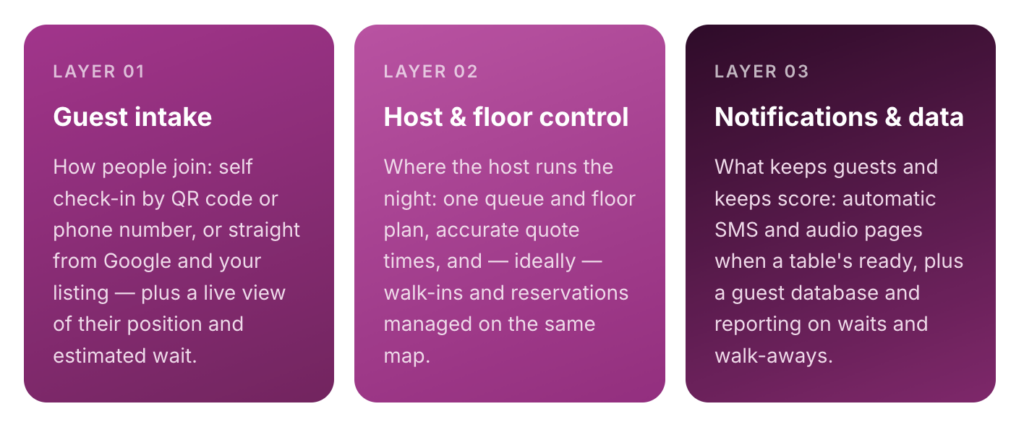
Rule of thumb: the feature that separates a waitlist tool from a waitlist system is integration. If walk-ins, reservations, and open tickets live in three places.
The case starts with a comparison every operator can feel on a Friday night: the same rush, run on paper versus run digitally. The paper list loses guests it never accounts for. The digital one keeps them informed, seats them faster, and tells you afterward exactly what happened.
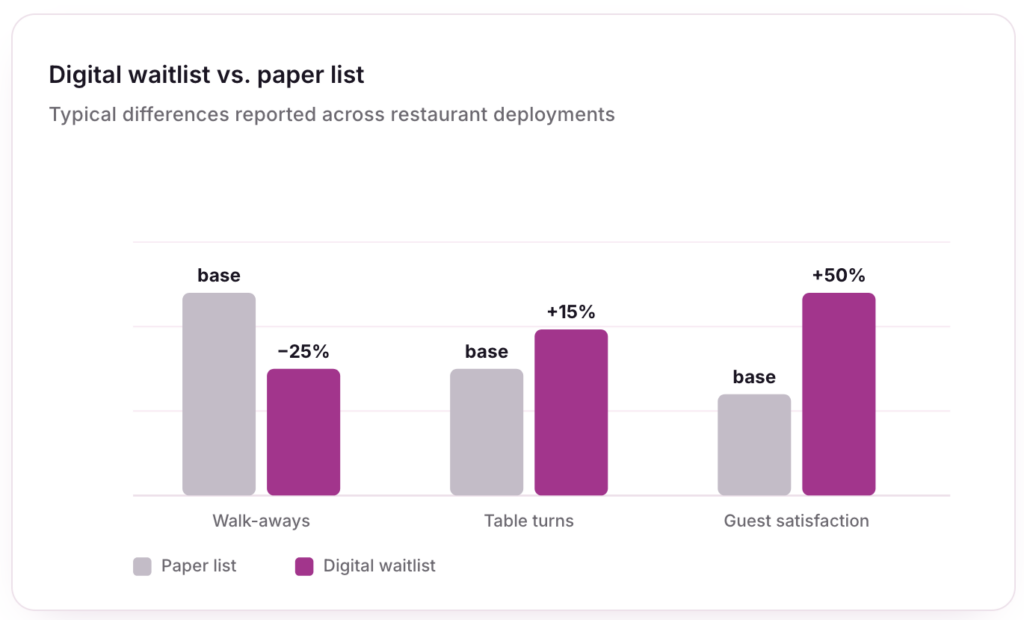
The satisfaction bar matters more than it looks. A negative wait experience generates about 2.5 times more online reviews than a positive one, so a mismanaged lobby doesn’t just cost tonight’s covers, it follows you onto Google and Yelp for months.
Walk-aways aren’t linear, they accelerate. A guest quoted a wait will hold on for a while, then hit a threshold and leave fast. Knowing that curve is the whole point of managing the queue, because the goal isn’t to eliminate the wait; it’s to keep guests past the point where they’d otherwise give up.
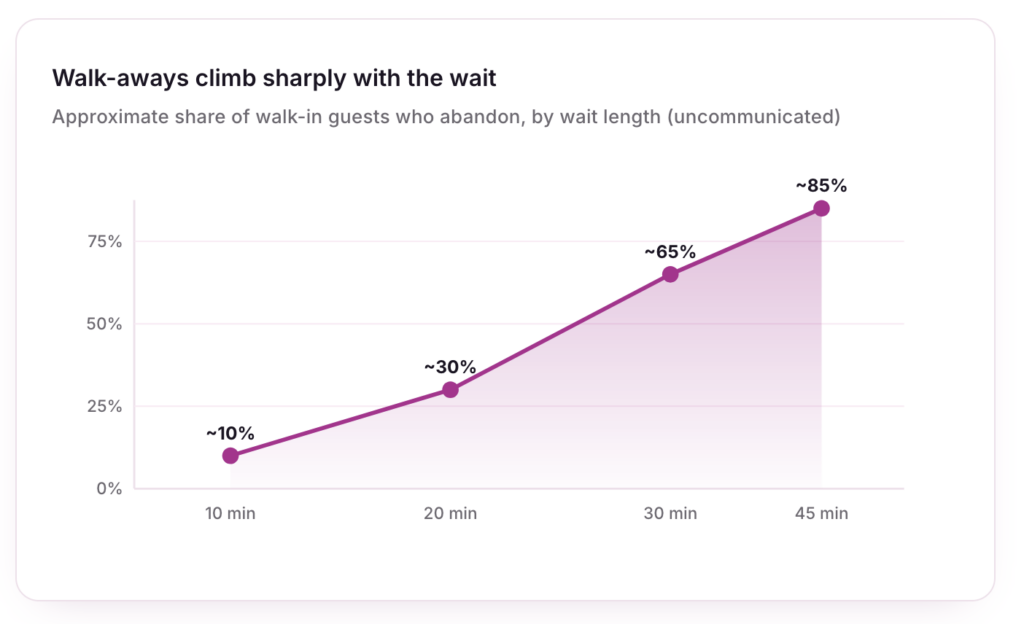
Why communication buys time: guests who receive updates during a wait report roughly 50% higher satisfaction even when the wait length is identical. Showing a live position in line and texting an accurate “table ready” is how a digital waitlist bends the curve above, the same 25-minute wait becomes tolerable when the guest isn’t left guessing.
Part of the case for a digital waitlist is simply that guests now assume one. The same person who joined a virtual queue at their coffee shop and tracked a delivery in real time finds a paper clipboard and a crowded doorway jarring. Meeting that expectation is now part of looking like a well-run restaurant.
Nearly every option below will “manage a waitlist.” What differs is how much of the front of house it actually connects. These are the capabilities worth weighing before you pick one.
|
Capability
|
Why It Matters
|
Stand Alone vs System
|
|---|---|---|
|
Self-serve check-in
|
QR or phone-number join cuts host workload and shortens the perceived wait.
|
Both may offer it; systems tie it to the floor plan.
|
|
Real-time position & SMS
|
Live queue visibility and "table ready" texts are what keep guests past the cliff.
|
Table stakes - confirm SMS is included, not metered.
|
|
Reservations on one floor plan
|
Walk-ins and bookings competing for the same tables need one map, not two apps.
|
The clearest system-vs-tool divide.
|
|
POS integration
|
Keeps walk-ins, reservations, and open tickets in one source of truth.
|
Rare in standalone tools; native in full platforms.
|
|
Google join
|
Turns search and Maps traffic into queue entries without a call or app.
|
A high-value intake channel many tools skip.
|
|
Guest data & analytics
|
Walk-away patterns and guest profiles turn the waitlist into marketing.
|
Depth ranges from none to full CRM.
|
The right choice depends on how much of your front of house you want on one system, and where your guests discover you. The table frames the main options; Snappy is highlighted because its waitlist is a native part of the same platform as reservations and the POS, rather than a standalone app.
|
System
|
Best for
|
Waitlist strengths
|
Model
|
|---|---|---|---|
|
Snappy
|
Operators wanting waitlist + reservations native to the POS
|
QR self check-in, Google Waitlist, SMS & audio pages, one floor plan, guest CRM
|
Part of the all-in-one platform; competitive pricing
|
|
Yelp Guest Manager
|
Restaurants with heavy Yelp discover
|
Join the queue straight from the Yelp listing
|
Subscription
|
|
Waitwhile
|
Mixing walk-ins with appointments
|
Polished guest UX; booking calendar beside the queue
|
Free tier; paid from ~$59/mo
|
|
OpenTable
|
Reservation-first restaurants adding a waitlist
|
Large diner network; timeline floor view
|
Cover fees + subscription
|
|
Sevent Rooms
|
Data-driven groups & hospitality
|
Deep CRM and walk-away analytics
|
Custom / enterprise
|
Once you’ve shortlisted a few systems, the demos will all look capable. Compare them on the things that actually diverge, not the features every vendor lists. Start with fit: match the system to how your guests find and wait for you. A reservation-heavy dining room, a walk-in-only brunch spot, and a group with strong Yelp or Google traffic will each weigh the options differently.
Then pressure-test integration depth, which is where standalone tools and full platforms separate. Ask whether the waitlist and reservations share one floor plan, and whether both sync to the POS or whether your host will reconcile walk-ins, bookings, and tickets across separate screens on the busiest night.
Systems that keep the waitlist, reservations, and POS on a single platform score highest on those criteria. Snappy is one such option: its reservation & waitlist runs QR and phone self check-in, real-time guest position, SMS and audio alerts, and Google Waitlist integration on the same floor plan as reservations all synced to the POS with a built-in guest CRM.
The one-question test: “When a walk-in and a reservation want the same table at 7:15 on a Saturday, does one screen tell me that?” If the answer involves checking two apps, you’re comparing tools, not systems and the difference will show up on every busy shift.
Systems that keep the waitlist, reservations, and POS on a single platform score highest on those criteria. Snappy is one such option: its reservation & waitlist runs QR and phone self check-in, real-time guest position, SMS and audio alerts, and Google Waitlist integration on the same floor plan as reservations all synced to the POS with a built-in guest CRM.
A waitlist system is quick to deploy, but a few decisions up front determine whether it actually reduces walk-aways or just digitizes the clipboard.
Consider a mid-size full-service restaurant that seats around 200 walk-in parties a week. At a 10% uncommunicated walkout rate, that’s roughly 20 lost parties weekly. A digital waitlist won’t recover all of them — but cutting walk-aways and turning tables a little faster adds up quickly against a small software cost.
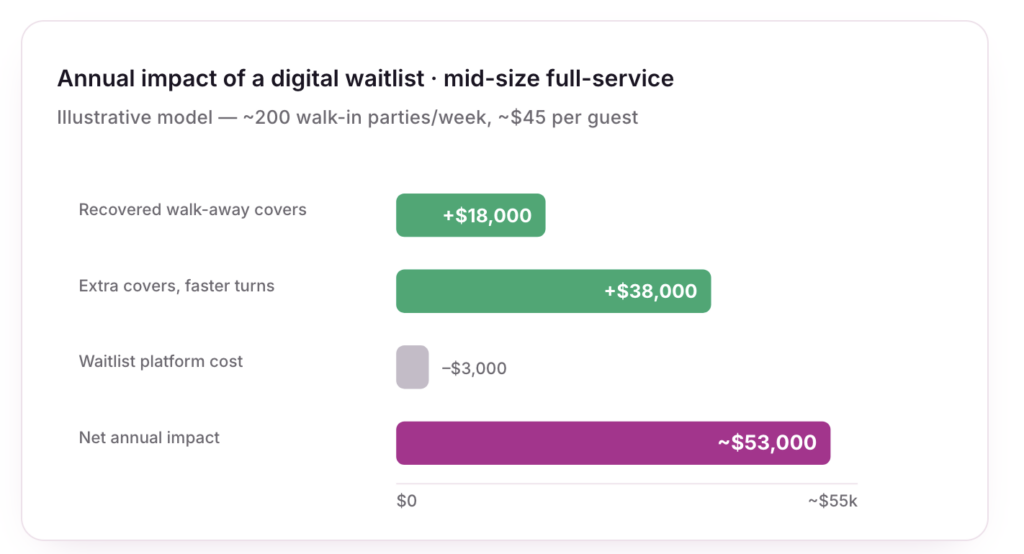
The waitlist is one of the cheapest systems in the restaurant and one of the most directly tied to revenue on your best nights. Even recovering a few parties per shift and shaving minutes off each turn covers the cost many times over before counting the reviews you didn’t earn from a frustrated lobby.
A digital waitlist is a small investment aimed squarely at your most valuable, most fragile moment: the busy-night crowd deciding whether to stay. Get it right and you keep covers you were quietly losing.
The lobby is where a great night is won or lost. A digital waitlist makes sure the guests who showed up actually stay to be seated.
It’s software that replaces the paper list at the host stand. Guests join by phone number or QR code (or from Google), see their real-time position and estimated wait, and get a text when their table is ready. Hosts manage one live queue, and the better systems tie it to the floor plan, reservations, and POS.
Yes. Research points to roughly 25% fewer walk-aways and 15% faster table turns versus a paper list, largely because guests who can see their position and step away without losing their place are far more willing to wait. Keeping guests informed also lifts satisfaction about 50% even when the wait length is unchanged.
Ideally, yes. If walk-ins, reservations, and open tickets live in separate apps, the host reconciles them by hand exactly when it’s busiest and tables get double-promised. A system that runs the waitlist and reservations on one floor plan synced to the POS removes that manual step.