
November 20th, 2026
Managing a restaurant waitlist can be challenging, especially when multiple locations experience different levels of customer demand. One restaurant may have a lineup outside the door, while another has available tables. Without a centralized way to monitor waiting guests, coordinate seating, and communicate wait times, restaurant groups risk losing customers and creating unnecessary pressure on front-of-house teams.
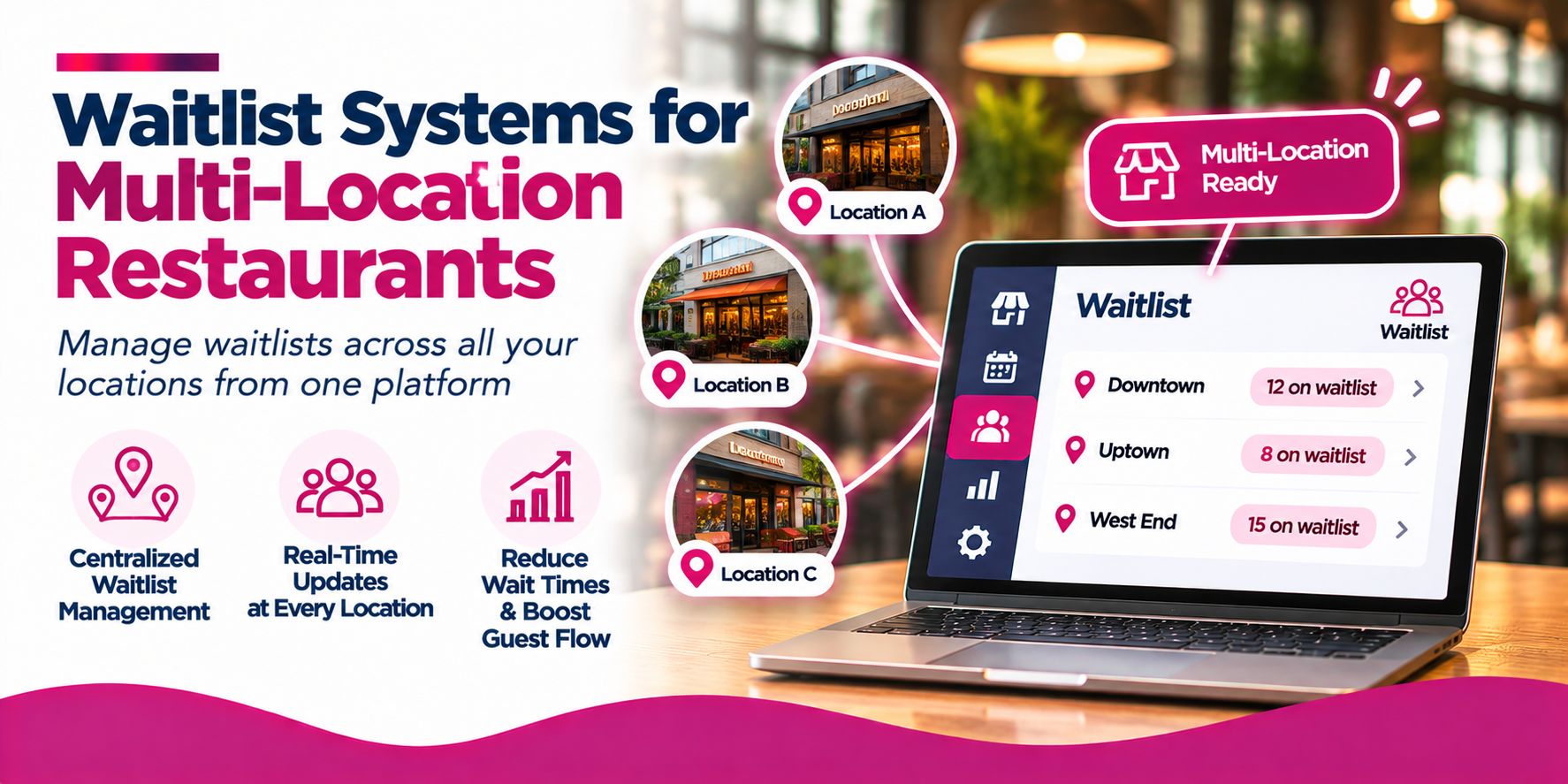
A waitlist system for multi-location restaurants helps operators manage walk-ins, waiting parties, table availability, and guest notifications across multiple establishments. Modern platforms can also provide real-time waitlist updates, automated text messages, guest profiles, seating recommendations, and AI-powered phone assistance.
Popular solutions include Snappy Waitlist, Toast Tables, OpenTable, Waitwhile, and TouchBistro. These platforms offer different approaches to queue management, table seating, and multi-location operations.
This guide compares the options, explains which features matter most for restaurant groups, and shows how to choose a waitlist system that improves guest experiences and keeps service running efficiently.
Centralized waitlist management improves visibility: Managers can monitor waiting guests and operational activity across multiple restaurant locations.
Digital waitlists reduce front-of-house pressure: Guests can join online, in person, or by phone instead of waiting in a physical line
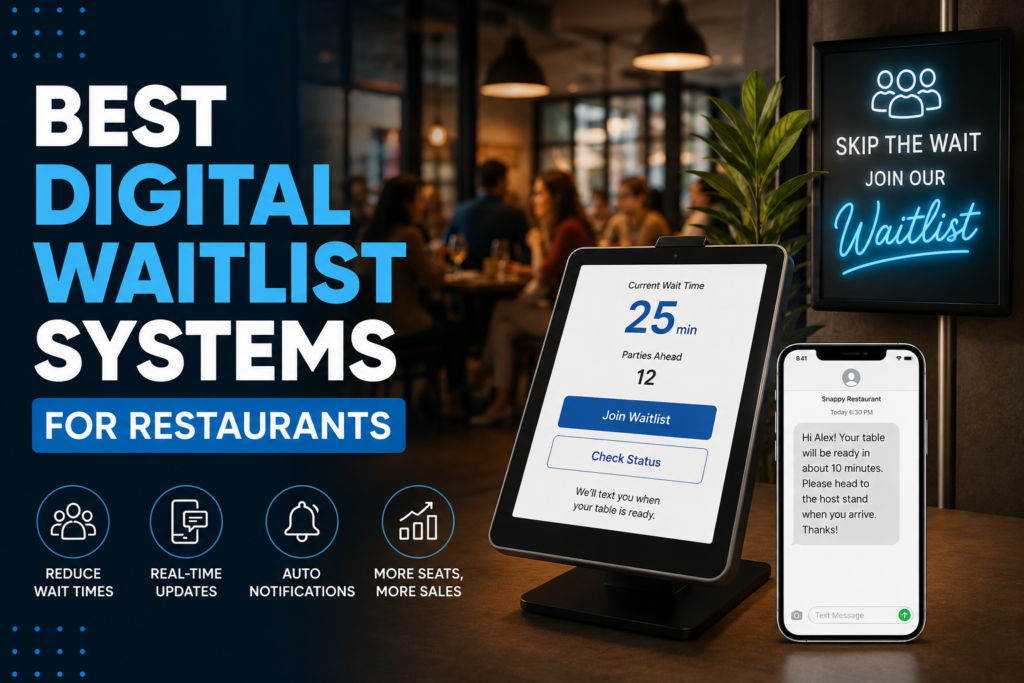
Automated notifications improve communication: SMS updates keep guests informed about their position and estimated waiting time.
Better table management supports efficiency: Matching party sizes with available tables helps restaurants manage seating more effectively.
AI adds another layer of automation: AI voice assistants can accept phone waitlist requests, while predictive tools can help estimate waiting times.
Snappy Waitlist is one option to consider: It supports online, in-person, and phone waitlists, AI-powered phone management, automated SMS updates, guest profiles, and centralized multi-location management.
Choose software that balances consistency and flexibility: Each restaurant needs location-specific waitlist settings while management needs a broader view of performance.
A restaurant waitlist system is software that helps businesses organize guests waiting for available tables.
Instead of relying on handwritten lists or manually managing a queue, employees can use a digital platform to record guest names, party sizes, arrival times, seating preferences, and phone numbers.
For restaurant groups, multi-location waitlist software extends these capabilities across several establishments. Managers can oversee individual location waitlists while accessing broader operational information through a shared account or dashboard, depending on the platform.
Common features include:
Some platforms also support AI voice assistants, predictive wait-time estimates, and integrations with reservations and POS systems.
The goal is to make the waiting experience more convenient for customers while giving employees better control over the dining room.
Managing a waitlist across multiple restaurants involves more than keeping track of names and party sizes. Restaurant groups need consistent procedures, location-specific information, and visibility into how each dining room operates.
1. Manage Multiple Locations From One Platform
Without centralized software, managers may need to access separate systems or contact individual locations to understand their waitlist activity.
A multi-location platform can provide a shared management environment while allowing each establishment to maintain its own waitlist, floor plan, operating hours, and seating rules.
This is particularly helpful for regional managers overseeing several busy locations.
2. Reduce Customer Walkouts
Guests are more likely to become frustrated when they cannot get an accurate estimate of how long they will have to wait.
Digital waitlist software allows restaurants to provide clearer information about guest position and estimated wait times. SMS notifications can also let guests move away from crowded entrance areas while keeping them informed.
Consumer research highlights the importance of this flexibility. OpenTable’s 2026 Canadian Restaurant Dining Trends Report found that 40% of Canadian consumers wanted more opportunities for spontaneous dining experiences, and Canadians were willing to wait an average of 28 minutes as walk-in diners.
OpenTable also recorded a 144% year-over-year increase in its Canadian Notify Me alerts during 2025. This platform-specific figure reflects growing use of that feature, rather than the entire restaurant market.
These trends suggest that restaurants need ways to capture last-minute dining demand and keep waiting customers informed.
3. Improve Seating Efficiency
An inefficient seating process can leave available tables unused while guests remain on the waitlist.
Digital waitlist systems help hosts match waiting parties with available tables based on party size, table capacity, and seating preferences.
For multi-location businesses, standardized seating workflows can also make it easier to compare how different locations manage their dining rooms.
4. Reduce Staff Workload During Peak Hours
During busy periods, front-of-house employees may need to greet guests, manage reservations, answer phone calls, coordinate seating, and communicate estimated waits.
Automated waitlist registration and notifications reduce some of these repetitive tasks.
AI phone assistants can add another layer of support by accepting waitlist requests without requiring an employee to answer every incoming call.
5. Improve Guest Recognition Across Locations
Guest profiles and visit history help employees recognize returning customers and understand their preferences.
When supported across locations, shared guest information can help restaurant groups deliver more consistent hospitality. A customer who regularly visits one branch may be recognized when dining at another.
Data-sharing permissions and guest-profile access should be configured carefully to respect privacy requirements.
6. Compare Performance Across Locations
Waitlist data can help restaurant groups identify differences in demand, service speed, and seating efficiency.
Managers can review:
These insights can help operators identify locations that need different staffing levels, floor-plan adjustments, or waitlist policies.
| Platform | Main Strength | Multi-Location Capabilities | Best Fit |
|---|---|---|---|
| Snappy Waitlist | AI-assisted waitlist management. | Centralized waitlist dashboard, location management, guest updates, and seating tools. | Restaurant groups seeking centralized waitlist operations and AI phone assistance. |
| Toast Tables | POS-connected waitlist and reservations. | Location switching and location-specific waitlist workflows. | Restaurant groups using Toast POS. |
| OpenTable Waitlist | Online guest access and diner discovery. | Restaurant-group solutions; confirm consolidated waitlist management requirements. | Groups prioritizing online guest discovery and waitlist registration. |
| Waitwhile | Flexible digital queue management. | Multi-location accounts, location settings, and cross-location analytics. | Groups needing customizable queue management. |
| TouchBistro Reservations | POS-integrated reservations and waitlists. | Restaurant-group and venue-level management capabilities. | Groups using TouchBistro technology. |
The best solution depends on your existing technology, number of locations, customer flow, and the level of automation you need.
Snappy Waitlist is designed to help restaurant groups manage waiting guests, table availability, and customer communication across multiple locations.
Its platform supports online, in-person, and phone-based waitlist registration, with AI assistance for handling incoming phone requests.
Key features include:
Snappy is particularly relevant for restaurant groups that want one system to manage waitlist activity without requiring every location to replace its existing POS.
Best for: Restaurant groups and growing brands that want centralized waitlist management, AI phone assistance, and automated guest communication.
Toast Tables combines waitlist and reservation management with Toast’s restaurant technology ecosystem.
The platform allows hosts to add walk-in parties, manage reservations, assign tables, and notify guests when their tables are ready.
Key features include:
Toast’s documentation also describes switching between restaurant locations through the Toast Tables app, making it relevant to operators managing multiple Toast locations.
Best for: Multi-location restaurant groups already using Toast POS that want waitlist and reservation tools within their existing technology environment.
OpenTable Waitlist lets customers join a restaurant’s waitlist remotely instead of waiting at the front door.
Its platform combines guest booking and waitlist features with OpenTable’s restaurant discovery network.
Key features include:
Best for: Restaurant groups that want to offer digital waitlists while benefiting from a reservation and diner-discovery platform.
Waitwhile offers digital waitlists and customer queue management for restaurants and other businesses.
Its platform supports separate location configurations, allowing multi-location operators to manage customer queues according to each establishment’s requirements.
Key features include:
Best for: Restaurant groups that need flexible waitlist management across multiple establishments, particularly when locations have different customer-flow requirements.
TouchBistro Reservations combines digital reservations, waitlist management, and table-flow tools with the TouchBistro POS ecosystem.
Its broader multi-location environment supports restaurant groups that need to organize venues and manage selected guest-engagement tools across their operations.
Key features include:
Best for: Restaurant groups already using TouchBistro that want connected reservations, waitlists, and front-of-house management.
Not all waitlist systems are designed for restaurant groups. A platform that works well for one location may not offer the visibility, flexibility, or access controls required across multiple establishments.
| Feature | Why It Matters | What to Check |
|---|---|---|
| Centralized Dashboard | Gives managers visibility into waitlist activity across locations. | Consolidated views, location filters, and user permissions. |
| Location-Specific Settings | Allows each restaurant to operate according to its own floor plan and service requirements. | Separate operating hours, table layouts, and waitlist rules. |
| Online Waitlist | Lets guests join the waitlist remotely. | Mobile-friendly registration and location selection. |
| In-Person Registration | Helps hosts manage walk-in parties. | Quick guest entry and party-size capture. |
| AI Phone Waitlist | Accepts phone requests when employees are busy. | AI availability, language support, and call escalation. |
| SMS Notifications | Keeps waiting guests informed. | Automatic status updates and customizable message templates. |
| Real-Time Wait Estimates | Helps guests understand when their table may be available. | Automatic estimates and manual adjustments. |
| Seating Optimization | Matches waiting parties with available tables. | Party-size matching and table-combination support. |
| Guest Profiles | Helps staff recognize returning customers. | Visit history, preferences, and privacy controls. |
| Reporting and Analytics | Helps managers compare performance across locations. | Wait times, walkouts, seating activity, and location-level reports. |
| POS Integration | Connects waitlist activity to restaurant workflows. | Compatibility, data sharing, and integration costs. |
Multi-location reporting helps restaurant groups identify which establishments are managing customer flow efficiently and which may need operational improvements.
Track these indicators:
Use consistent measurement definitions across all locations. For example, calculate average wait time from registration to seating rather than mixing in estimated waiting time or time spent after a table-ready notification.
The best waitlist system depends on your restaurant group’s size, existing POS environment, and customer-flow requirements.
Snappy Waitlist is one option worth evaluating for multi-location restaurants seeking centralized waitlist management, AI-powered phone requests, automated SMS updates, guest profiles, and table-seating optimization. Its ability to operate alongside an existing POS also makes it relevant for groups that want to add waitlist technology without replacing their current system.
Toast Tables is worth considering for groups already using Toast POS, while OpenTable offers online waitlist access and diner discovery. Waitwhile provides flexible multi-location queue management, and TouchBistro Reservations is an option for groups using its POS and guest-engagement tools.
Ultimately, choose software that gives local teams the flexibility to manage their own dining rooms while allowing management to monitor performance across the entire group. A good waitlist system should make the waiting experience more predictable for guests, reduce front-of-house workload, and help restaurants make better use of available tables.
It is software that helps restaurant groups manage waiting guests, seating availability, and notifications across several establishments. Depending on the provider, managers can oversee multiple locations through a centralized dashboard or shared account.
Yes. AI-powered phone assistants can answer calls and add or manage waitlist requests through supported workflows. Some systems also use AI to estimate waiting times or help automate guest communication.