
September 17th, 2026
Managing reservations across multiple restaurant locations requires more than a basic online booking widget. Restaurant groups need a system that can centralize reservations, maintain location-specific availability, manage guest information, reduce no-shows, and give operators visibility across the entire portfolio.
The right reservation system can also make it easier for guests to discover availability at sister locations when their preferred restaurant is full, while giving managers a centralized view of bookings and guest activity.
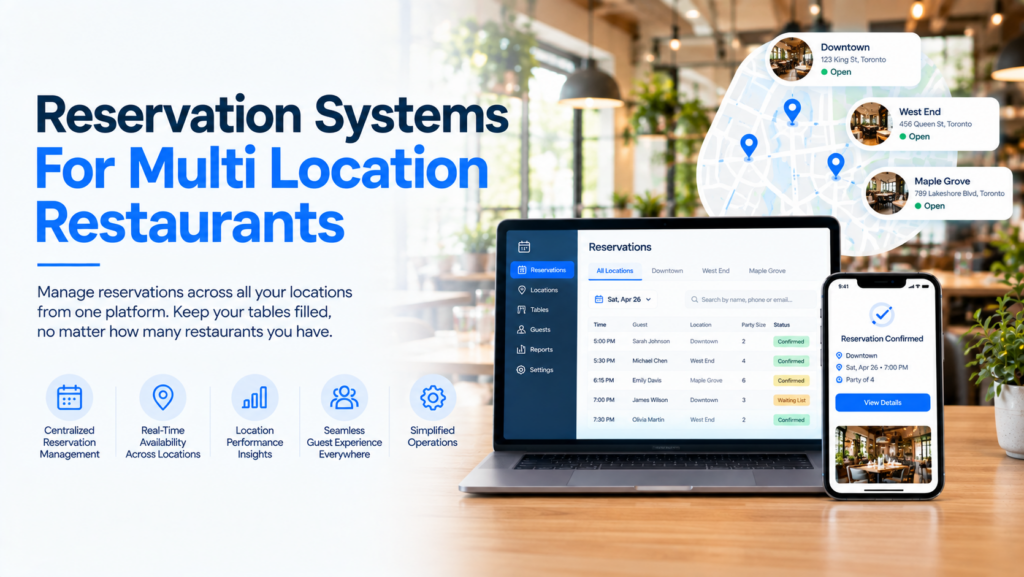
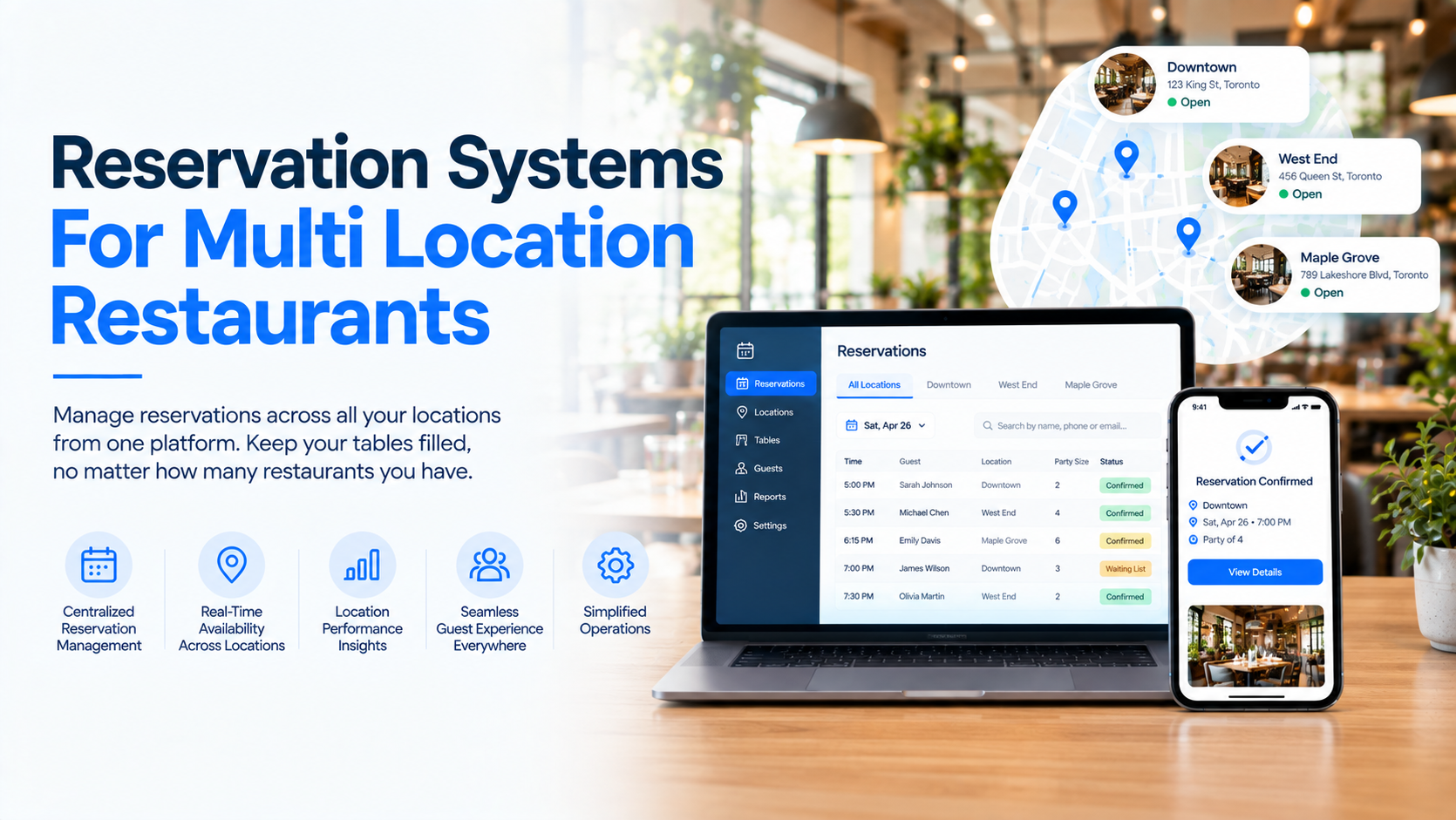
A multi-location restaurant reservation system allows restaurant groups to manage bookings for multiple establishments through a connected platform.
Instead of each restaurant maintaining a completely separate reservation book, centralized systems can give operators visibility into availability, reservations, guest information, and performance across their locations.
For example, a restaurant group could manage five locations from one dashboard while still maintaining separate menus, hours, table layouts, availability, and booking rules for each restaurant.
More advanced platforms can also allow guests to search availability across multiple locations. This means that if the first restaurant is fully booked, the system can direct the guest toward an available table at another location within the same group.
Manage Multiple Locations From One Place
Centralized reservation management reduces the need for managers and reservation teams to switch between separate systems for every restaurant.
Give Guests More Booking Options
When one location is full, a group-level booking experience can show availability at other restaurants in the portfolio.
Centralize Guest Information
Guest profiles, preferences, notes, visit history, and reservation information can be shared across locations where supported.
Reduce No-Shows
Automated confirmations, reminders, deposits, and cancellation policies can help restaurants protect valuable reservation inventory.
Standardize the Guest Experience
Restaurant groups can establish consistent booking processes across locations while still allowing individual restaurants to maintain their own operating rules.
A typical multi-location reservation system connects each restaurant to a centralized management platform.
Each location can maintain its own:
At the same time, corporate or regional teams can access information across the broader restaurant group.
Some platforms also provide a group-level booking experience. If a guest cannot find an available table at one location, the system can surface availability at another restaurant within the portfolio.
| Feature | Snappy Reservation | OpenTable | SevenRooms | Resy | TouchBistro Reservations |
|---|---|---|---|---|---|
| Multi-Location Management | ✓✓✓ | ✓✓✓ | ✓✓✓ | ✓✓✓ | ✓✓✓ |
| Centralized Reservations | ✓✓✓ | ✓✓✓ | ✓✓✓ | ✓✓✓ | ✓✓ |
| Cross-Location Availability | ✓✓ | ✓✓✓ | ✓✓✓ | ✓✓ | ✓✓ |
| Online Reservations | ✓✓✓ | ✓✓✓ | ✓✓✓ | ✓✓✓ | ✓✓✓ |
| Phone Reservations | ✓✓✓ | ✓✓✓ | ✓✓ | ✓✓ | ✓✓ |
| Guest Profiles | ✓✓✓ | ✓✓✓ | ✓✓✓ | ✓✓✓ | ✓✓ |
| Cross-Location Guest History | ✓✓ | ✓✓✓ | ✓✓✓ | ✓✓✓ | ✓✓ |
| Table Management | ✓✓✓ | ✓✓✓ | ✓✓✓ | ✓✓✓ | ✓✓✓ |
| SMS & Email Reminders | ✓✓✓ | ✓✓✓ | ✓✓✓ | ✓✓✓ | ✓✓ |
| Deposits / No-Show Protection | ✓✓✓ | ✓✓✓ | ✓✓✓ | ✓✓✓ | ✓✓ |
| Waitlist Integration | ✓✓✓ | ✓✓✓ | ✓✓✓ | ✓✓✓ | ✓✓ |
| Group-Level Reporting | ✓✓✓ | ✓✓✓ | ✓✓✓ | ✓✓✓ | ✓✓✓ |
| POS Integration | ✓✓✓ | ✓✓✓ | ✓✓✓ | ✓✓✓ | ✓✓✓ |
| Broader Restaurant Platform | ✓✓✓ | ✓✓✓ | ✓✓✓ | ✓✓✓ | ✓✓✓ |
Snappy Reservation is designed for restaurant groups that want to manage reservations across multiple locations while keeping individual restaurant operations organized. Its reservation system provides a centralized way to manage reservations, table availability, guest information, and seating across locations.
Snappy supports 24/7 online and phone reservations, email and SMS confirmations and reminders, deposits, cancellation and no-show fees, and AI-assisted reservation calls. The platform can also be expanded with Snappy POS, Waitlist, Online Ordering, Loyalty, and other restaurant products as a group’s needs evolve.
Best for: Restaurant groups looking for multi-location reservations alongside other restaurant management tools.
2. OpenTable
OpenTable provides reservation management for restaurant groups and supports centralized visibility across restaurant portfolios. Its group-management tools allow guests to view availability across multiple restaurant locations through a single booking experience.
OpenTable also provides guest history across restaurant groups, group-level reporting, table management, deposits and credit-card holds, and integrations with more than 200 restaurant technology partners.
Best for: Multi-location restaurants that want reservation management combined with access to a large diner discovery network.
3. SevenRooms
SevenRooms combines reservations with CRM, marketing, guest data, and restaurant operations. Its restaurant-group platform provides centralized guest profiles and allows restaurants to share guest information across locations and brands.
The platform also supports group-level reporting, multi-location booking, cross-selling between sister restaurants, and real-time availability across a restaurant portfolio.
Best for: Restaurant groups that place a strong emphasis on guest relationships, CRM, and cross-location marketing.
4. Resy
Resy offers reservation, table management, guest intelligence, automated communications, and operational tools for restaurants and hospitality groups. Its enterprise solution is designed to support centralized operations across multiple locations.
Resy also provides multi-location guest visibility, allowing operators to access guest profiles across multiple venues, alongside analytics and reporting capabilities.
Best for: Restaurant groups and hospitality operators that need centralized reservations and guest-management capabilities.
5. TouchBistro Reservations
TouchBistro provides reservations as part of its broader restaurant management platform. Its multi-unit tools allow operators to manage multiple locations from one account, while its reservation system supports bookings through a restaurant website, Google, and TouchBistro’s own booking channels.
The platform also provides centralized reporting and POS integration, which can be useful for restaurant groups already operating on TouchBistro.
Best for: Multi-location restaurants already using TouchBistro’s POS and restaurant management ecosystem.
| Area to Evaluate | What to Look For |
|---|---|
| Multi-Location Management | Manage multiple restaurants from one centralized system while maintaining location-specific settings. |
| Centralized Reservations | Give managers and reservation teams one place to view and manage bookings. |
| Cross-Location Availability | Allow guests and staff to find available tables at other restaurants within the group. |
| Guest Profiles | Maintain guest preferences, notes, visit history, and other relevant customer information. |
| Table Management | Manage floor plans, table combinations, seating capacity, and availability for each location. |
| Automated Communications | Send confirmations, reminders, and updates automatically through email or SMS. |
| No-Show Protection | Look for support for deposits, credit-card holds, cancellation policies, and no-show fees. |
| Reporting | Compare reservations, covers, cancellations, no-shows, and other performance metrics across locations. |
| POS Integration | Connect reservation activity with the POS and other restaurant systems. |
| Scalability | Make it easy to add new locations without rebuilding your reservation workflows. |
For restaurant groups, the main advantage is centralization.
Instead of managing reservations, guest information, reporting, and availability independently at every restaurant, a multi-location system can connect those workflows while preserving location-level control.
The most useful systems go beyond simply accepting online bookings. They combine reservations with table management, guest profiles, automated communications, no-show protection, reporting, and integrations with the restaurant’s broader technology stack.
For growing groups, scalability is also important. Adding a sixth, tenth, or twentieth location should not require rebuilding the reservation workflow from scratch.
The best reservation system for a multi-location restaurant depends on how much of the group’s operation needs to be centralized.
Snappy Reservation is designed for restaurant groups that want centralized reservation management while having the option to connect reservations with other restaurant systems. OpenTable combines multi-location management with a large diner discovery network, while SevenRooms places more emphasis on guest data, CRM, and cross-location engagement. Resy provides centralized tools for multi-location hospitality groups, and TouchBistro Reservations can be a natural fit for groups already using TouchBistro.
For any multi-location restaurant group, the key capabilities to evaluate are centralized reservation management, cross-location availability, guest data, table management, reporting, no-show protection, and integrations.
Yes. Multi-location reservation platforms can allow restaurant groups to manage bookings, availability, guest information, and reporting across multiple establishments from a centralized system. Snappy, OpenTable, SevenRooms, Resy, and TouchBistro all offer multi-location capabilities.
Yes. Multi-location systems can maintain location-specific availability, tables, hours, and operating rules while giving corporate teams centralized visibility.
Yes. POS integration is available across major restaurant reservation platforms, although the specific integrations and functionality vary by provider and plan. OpenTable supports 200+ restaurant technology integrations, while SevenRooms, Resy, TouchBistro, and Snappy also connect reservation workflows with broader restaurant systems.