
October 5th, 2026
Artificial intelligence is changing how restaurants manage sales, labour, inventory, customer service, marketing, and day-to-day operations. Instead of simply reporting what happened yesterday, modern restaurant management software can use AI to identify trends, recommend actions, automate repetitive tasks, and help operators make better decisions.
The best AI restaurant management software depends on what a restaurant needs most. Some platforms focus on AI-powered analytics and business insights, while others connect AI directly to ordering, reservations, inventory, labour, customer engagement, and other restaurant workflows.
AI restaurant management software uses artificial intelligence to analyze restaurant data and automate or improve business processes.
Traditional restaurant management software primarily records information. For example, a POS system can tell an operator how much was sold, which menu items performed best, or how many hours employees worked.
AI-powered restaurant management software can take that information further.
It can identify patterns, answer questions about business performance, forecast demand, recommend menu or marketing changes, automate customer communications, and in some cases take actions directly within the restaurant’s technology platform.
This makes AI particularly useful for restaurants because operators are constantly managing large amounts of information across sales, labour, inventory, customers, menus, online orders, reservations, and multiple locations.
Not every restaurant software platform that uses the word “AI” provides the same level of functionality. Restaurants should look beyond basic AI-generated reports and consider how deeply artificial intelligence is integrated into daily operations.
1. AI-Powered Business Insights
The platform should be able to analyze restaurant data and turn it into useful recommendations.
Instead of requiring managers to search through multiple reports, AI should help answer questions such as:
2. AI Automation
The biggest value of AI can come from reducing repetitive work.
Look for software that can automate tasks such as:
3. AI for Sales Growth
AI can help restaurants increase revenue by identifying opportunities to upsell, personalize promotions, and encourage repeat purchases.
For example, an AI system can use ordering and customer information to recommend relevant add-ons or create more targeted offers.
4. AI for Labour Management
Labour is one of the largest controllable expenses for many restaurants.
AI can help operators understand labour trends, identify staffing inefficiencies, and use sales and demand information to make better scheduling decisions.
5. AI for Inventory and Waste Reduction
Demand forecasting can help restaurants prepare for expected sales instead of relying entirely on historical averages.
More advanced platforms can incorporate factors such as sales history, seasonality, and other demand signals to help operators anticipate inventory requirements.
6. AI Across Multiple Locations
For restaurant groups, AI becomes even more valuable when it can analyze data across locations.
Multi-location operators should look for:
| Feature | Snappy Intelligence | Toast IQ | Square AI | Lightspeed AI |
|---|---|---|---|---|
| AI Business Insights | ✓✓✓ | ✓✓✓ | ✓✓✓ | ✓✓ |
| Sales Recommendations | ✓✓✓ | ✓✓✓ | ✓✓ | ✓✓ |
| AI Upselling | ✓✓✓ | ✓✓✓ | ✓✓ | ✓✓ |
| AI Phone Ordering | ✓✓✓ | ✓ | — | — |
| AI Reservations | ✓✓✓ | ✓✓ | — | ✓✓ |
| AI Customer Service | ✓✓✓ | ✓✓✓ | ✓✓ | ✓✓ |
| Demand Forecasting | ✓✓✓ | ✓✓ | ✓✓ | ✓✓✓ |
| Inventory Insights | ✓✓✓ | ✓✓✓ | ✓✓ | ✓✓✓ |
| Labour Insights | ✓✓✓ | ✓✓✓ | ✓✓ | ✓✓ |
| AI Review Responses | ✓✓✓ | ✓✓ | ✓ | ✓✓ |
| Multi-Location Insights | ✓✓✓ | ✓✓✓ | ✓✓ | ✓✓✓ |
| Restaurant-Specific AI Platform | ✓✓✓ | ✓✓✓ | ✓✓ | ✓✓ |
| AI Automation Across Operations | ✓✓✓ | ✓✓✓ | ✓✓ | ✓✓ |
| AI Connected to Ordering Workflows | ✓✓✓ | ✓✓✓ | ✓✓ | ✓✓ |
Best for: Restaurants looking for AI across sales, operations, customer service, inventory, and decision-making
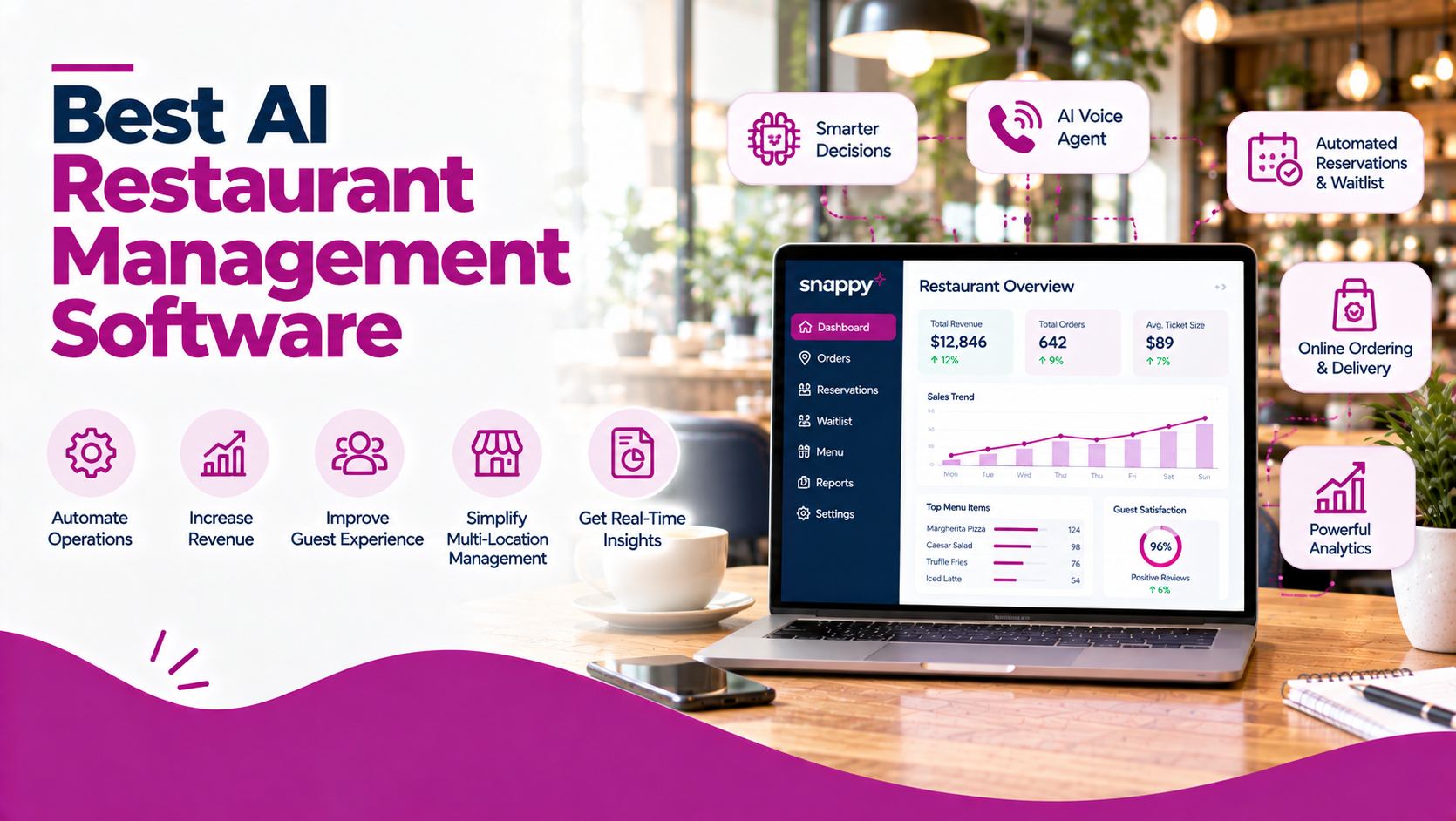
Snappy Intelligence is an AI platform designed specifically for restaurants. Rather than limiting AI to a reporting assistant, Snappy positions AI across core restaurant functions including POS, online ordering, voice ordering, reservations, waitlists, staff and shift management, reputation management, inventory, and analytics.
This makes Snappy Intelligence particularly interesting for restaurants that want AI to become part of everyday restaurant operations.
Snappy Intelligence can help restaurants with:
AI Sales Growth
Snappy Intelligence can use restaurant and customer data to identify upselling and personalized-offer opportunities.
Its AI-powered ordering capabilities can recommend add-ons and combos, while its broader platform connects those capabilities with the restaurant’s menu and ordering systems.
AI Phone Ordering
One of Snappy’s differentiating AI capabilities is its Voice Agent.
The system can handle phone orders, reservations, and restaurant questions around the clock. Snappy says the voice agent can take phone orders and sync them directly with the POS.
For busy restaurants, this can help reduce missed calls while allowing staff to focus on guests already in the restaurant.
AI Reservations and Waitlists
Snappy Intelligence also applies AI to reservations and waitlists.
Its reservation and waitlist solution is designed to accept, confirm, remind, and manage guest requests, including during busy periods.
AI Inventory and Demand Forecasting
Inventory is another major area where Snappy applies AI.
Snappy describes demand forecasting that can account for weather, seasonality, and sales history, with predictive alerts intended to help restaurants prepare for demand spikes and identify low-stock situations.
AI Analytics
Snappy Analytics & Reporting combines restaurant transaction data with AI-generated recommendations.
The platform is designed to provide insights across sales, customers, operations, products, and locations, with recommendations that operators can use to make decisions.
Best for: Restaurants already operating on Toast
Toast IQ is Toast’s AI assistant for restaurants and retailers. It is built directly into the Toast platform and is designed to help operators get answers, discover insights, and take action across restaurant workflows.
Toast IQ can analyze restaurant data and help operators with areas such as:
Toast IQ can also take certain actions directly from the chat interface, depending on the restaurant’s products, permissions, and available data.
Toast’s current AI platform also includes proactive recommendations and workflows designed to surface opportunities rather than simply waiting for an operator to ask a question.
Best for: Restaurants looking for accessible AI-powered business insights
Square AI is built into Square’s business tools and is designed to help businesses ask questions about their data, identify trends, generate insights, and automate certain routine tasks.
Square AI can help operators:
Best for: Restaurants already using Lightspeed
Lightspeed has increasingly incorporated AI into its restaurant technology and back-office workflows.
For restaurants already using Lightspeed, AI capabilities can complement existing tools for reporting, operations, inventory, and restaurant management.
The main advantage is the connection between AI capabilities and the data already stored within the Lightspeed ecosystem.
A switch only makes sense if there is a recovery curve. Four real sources of payback:
Combined, a well-executed switch recovers $10,000–$25,000/yr on a $1M restaurant, putting payback on a $30,000 switch at 14–24 months. Beyond 30 months and the business case is fragile.
There is no single AI platform that is perfect for every restaurant.
However, restaurants looking for a broad AI-powered management platform should consider Snappy Intelligence among their top options.
Snappy’s biggest advantage is the breadth of its AI approach. Rather than focusing primarily on an AI assistant for business questions, Snappy Intelligence is designed to connect AI with sales, ordering, phone calls, reservations, waitlists, inventory, customer service, reputation management, analytics, and other restaurant functions.
For restaurants looking beyond AI reporting and toward AI-powered restaurant operations, Snappy Intelligence is one of the more comprehensive options to evaluate.
Snappy Intelligence is a strong overall option for restaurants that want AI across sales, ordering, customer service, reservations, inventory, analytics, and operations. Toast IQ, Square AI, and Lightspeed AI are also worth considering depending on the restaurant’s existing technology ecosystem.
AI can analyze sales and customer data, forecast demand, identify operational issues, recommend upsells, automate customer communications, answer phone calls, assist with reservations, provide inventory alerts, and help operators make faster business decisions.
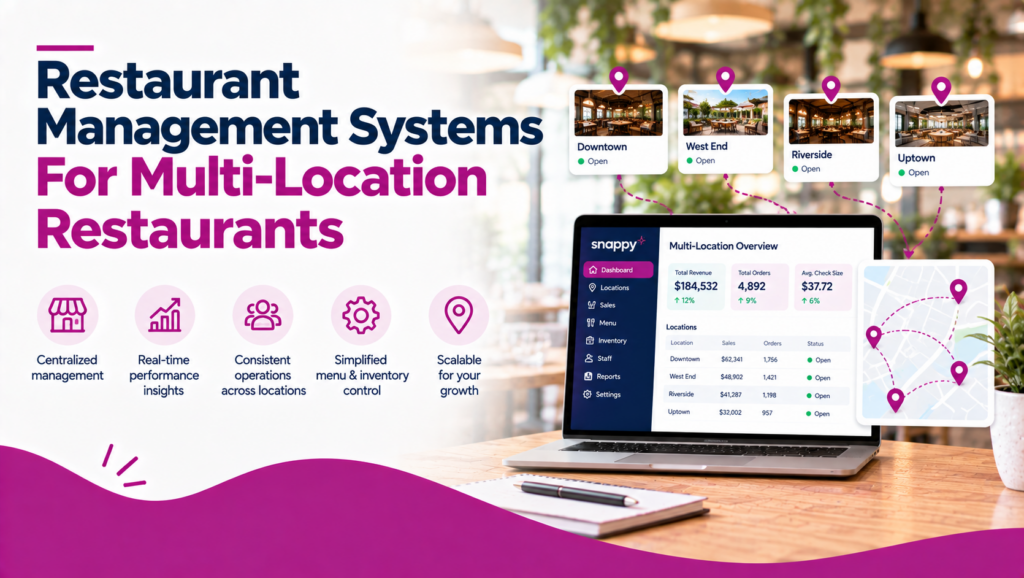
Yes. Multi-location restaurants can use AI to compare sales, labour, menu, customer, and operational performance across locations. Centralized AI insights can help restaurant groups identify trends and opportunities that may be difficult to see when each location is analyzed separately.
Not necessarily. The most useful restaurant AI is connected to actual restaurant data and workflows. Platforms such as Snappy Intelligence and Toast IQ connect AI with restaurant systems so operators can use AI for insights, recommendations, and actions rather than simply having a general-purpose conversation.