
November 13th, 2026
For an independent restaurant, every table matters. A missed reservation, an empty table after a last-minute cancellation, or a disorganized waitlist can mean lost revenue and a frustrating experience for guests. At the same time, managing bookings manually can take valuable time away from employees who should be focusing on service.
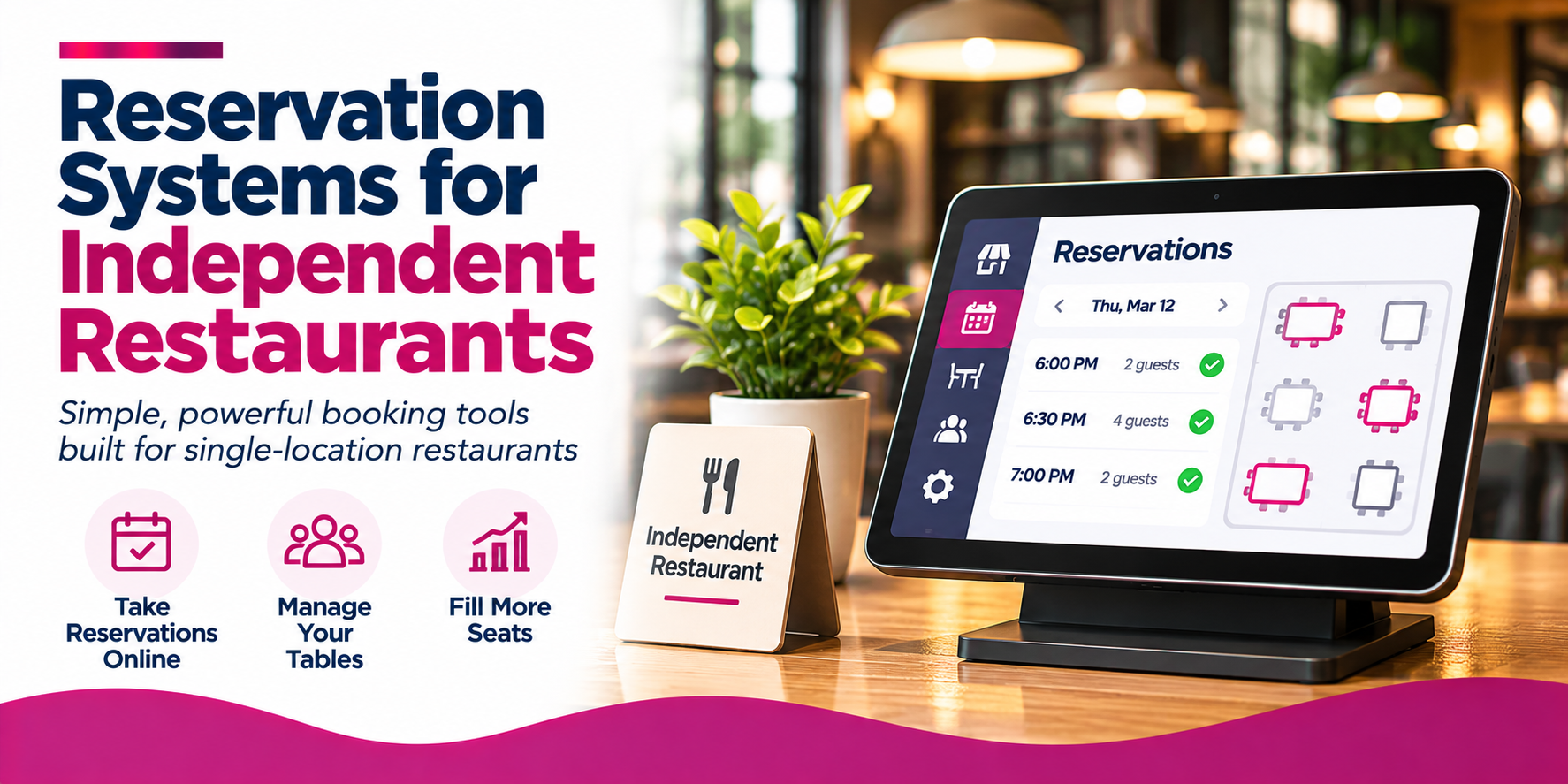
A restaurant reservation system helps independent operators manage bookings, guest information, table availability, confirmations, and waitlists in one place. Modern platforms can also automate reminders, collect deposits, reduce no-shows, and use AI to answer reservation calls around the clock.
Popular options include Snappy Reservation System, OpenTable, Eat App, Resy, Tock, and SevenRooms. Each offers a different combination of booking tools, guest management, table planning, and automation.
This guide compares the options, explains which features matter most for independent restaurants, and shows how to choose a system that supports both profitability and hospitality.
Reservation software reduces manual work: It centralizes online bookings, phone reservations, guest details, and table availability.
Direct booking options matter: A booking widget on your website and integrations with Google can make it easier for guests to reserve directly.
No-show prevention protects revenue: Automated reminders, deposits, cancellation policies, and waitlists help restaurants manage unused tables.
Guest profiles support personalized service: Reservation history, preferences, and notes help staff recognize returning customers.
AI adds another layer of automation: AI can answer reservation calls, manage waitlist requests, identify regulars, and send personalized follow-ups.
Snappy is one option for independent restaurants: Its Reservation System combines online and phone bookings, AI reservation assistance, confirmations, reminders, deposits, guest information, and table management.
Choose based on your operation: Consider pricing, booking channels, POS compatibility, guest-data ownership, and ease of use before committing.
Instead of relying on a paper reservation book, spreadsheets, or separate booking channels, staff can use a centralized system to view availability, assign tables, record guest information, and manage changes.
Depending on the platform, reservation software may include:
More advanced platforms also include AI voice assistants, automated guest communication, table optimization, and customer insights.
For independent restaurants, the main goal is to make reservations easier to manage without adding unnecessary complexity or cost.
Reservation software is not only for fine dining establishments. Neighbourhood restaurants, cafés, bistros, and casual dining businesses can also benefit from better booking and table management.
1. Avoid Losing Bookings When Staff Are Busy
Independent restaurants often operate with smaller teams. During a rush, employees may not have time to answer every phone call or respond to online inquiries.
An online reservation system allows customers to check availability and book a table without waiting for someone to answer the phone.
The demand for reservation technology is reflected in Canadian industry research. The 2026 Canadian State of Restaurants Report, based on a survey of 600 full-service restaurant operators in late 2025, found that 28% of operators planning to increase technology spending identified reservation software as a planned investment.
These figures cover Canadian full-service restaurants, not independent restaurants exclusively, but they demonstrate the importance operators place on reservation management.
2. Reduce No-Shows and Last-Minute Cancellations
A reservation that does not show up can leave a table unused during a busy service. Last-minute cancellations create a similar challenge because there may not be enough time to offer the table to another party.
A reservation system can help by sending confirmations and reminders, applying cancellation policies, collecting deposits, and notifying waitlisted guests when availability opens.
A useful benchmark comes from the 2026 No-Show Index. Across 3.77 million reservations at 2,417 restaurants between August 2025 and July 2026, the recorded no-show rate was 2.33%. Its Canadian subset recorded a 2.98% rate across 78,759 reservations at 60 restaurants.
These are platform-specific booking records, not a representative survey of every Canadian restaurant. That makes timely communication and a well-managed waitlist particularly important.
3. Improve Table Management and Seating
A reservation system helps staff see which tables are booked, how many guests are expected, and when tables may become available.
Digital floor plans and seating tools can help operators:
This visibility can help independent restaurants make better use of their dining space without relying entirely on memory or handwritten notes.
4. Build Better Relationships With Guests
Guest profiles can record reservation history, preferences, visit frequency, special occasions, and notes from previous visits.
This information helps staff recognize regulars and provide more personalized service. It can also help restaurant owners identify frequent customers and create targeted follow-up campaigns.
For an independent restaurant that depends on repeat business, remembering guests can be just as important as attracting new ones.
5. Save Time on Administrative Tasks
Automated confirmations, reminders, cancellations, and waitlist notifications reduce the need for staff to make repetitive phone calls or manually update booking records.
TouchBistro’s 2026 Canadian report found that 48% of operators who had automated tasks reported saving time, while 47% reported faster service. These findings apply to automation in restaurant operations generally, rather than reservation software alone.
The takeaway for independent operators is straightforward: automation is most useful when it removes repetitive work without making the guest experience less personal.
| Platform | Main Strength | Key Features | Best Fit |
|---|---|---|---|
| Snappy Reservation System | AI-assisted reservations and waitlists. | 24/7 AI bookings, reminders, deposits, guest insights, table management, and personalized follow-ups. | Restaurants seeking connected reservation and waitlist automation. |
| OpenTable | Diner discovery and booking reach. | Online bookings, marketplace exposure, floor plans, guest profiles, deposits, and POS integrations. | Restaurants looking to reach more diners through a booking network. |
| Eat App | Direct online reservations and guest management. | Website and Google bookings, waitlists, guest CRM, messaging, and table management. | Independent restaurants prioritizing direct bookings. |
| Resy | Dining experiences and reservation management. | Table management, waitlists, deposits, guest notes, and ticketed experiences. | Experience-driven restaurants and special-event dining. |
| Tock | Prepaid bookings and events. | Deposits, prepayments, ticketing, waitlists, and scheduled reservation releases. | Restaurants offering tasting menus and ticketed dining. |
| SevenRooms | Guest relationships and personalization. | Guest CRM, AI voice, table management, marketing, and analytics. | Restaurants focused on repeat visits and personalized hospitality. |
The right provider depends on your booking volume, service style, budget, and existing technology. Here are six platforms worth evaluating.
Snappy Reservation System combines online bookings, phone reservations, guest communication, table management, and automation in a restaurant-focused platform.
It is designed to help restaurants manage reservations and waitlists while reducing manual work at the host stand.
Key features include:
Best for: Independent restaurants that want reservations, waitlists, AI phone booking, guest communication, and table management connected in one restaurant-focused solution.
OpenTable combines reservation management with a large diner discovery network.
Its platform provides online bookings, customizable floor plans, table management, waitlists, guest profiles, automated messaging, and deposit options.
Key features include:
Best for: Independent restaurants that want reservation management and additional visibility through a third-party discovery platform.
Eat App offers reservation management, table planning, waitlists, guest profiles, and marketing tools.
It emphasizes direct bookings through restaurant websites, Google, and social channels, along with guest-data management.
Key features include:
Best for: Independent restaurants looking to increase direct reservations while organizing guest information and front-of-house operations.
Resy offers restaurant reservation and table management software through its Resy OS platform.
Its tools are designed to help restaurants manage reservations, walk-ins, dining experiences, and guest information.
Key features include:
Best for: Independent restaurants with a strong focus on dining experiences, special events, and reservation management.
Tock combines restaurant reservations with prepaid bookings, ticketed experiences, and event management.
It can be useful for businesses that offer tasting menus, special dining events, wine experiences, or high-demand reservation periods.
Key features include:
Best for: Independent restaurants that host ticketed events, prix fixe meals, tasting menus, and special dining experiences
| Feature | Why It Matters | What to Check |
|---|---|---|
| Online Booking Widget | Allows guests to make reservations without calling the restaurant. | Website and mobile compatibility. |
| Google Booking Integration | Makes reservations easier to access during local searches. | Availability in your region and setup requirements. |
| Table Management | Helps optimize seating and prevent double bookings. | Digital floor plans and table combinations. |
| Waitlist Management | Helps fill tables when guests cancel or availability opens. | SMS updates and estimated wait times. |
| Automated Reminders | Keeps reservations visible to guests before arrival. | Email, SMS, and reminder timing. |
| Deposits and Cancellation Policies | Helps protect revenue during high-demand services. | Payment handling, fees, and configurable policies. |
| Guest Profiles | Supports personalized hospitality and guest recognition. | Reservation history, preferences, and notes. |
| AI Booking Assistance | Helps capture calls and bookings outside staff hours. | AI language support, escalation, and booking accuracy. |
| Reporting | Helps evaluate reservation performance. | Covers, cancellations, no-shows, and booking sources. |
| POS Integration | Connects reservations with wider restaurant operations. | Compatibility, data sharing, and additional costs. |
Choosing a reservation platform should start with your restaurant’s daily workflow, not the number of features a provider advertises.
1. Identify your booking needs. Determine whether most bookings arrive through your website, Google, phone, walk-ins, or third-party platforms.
2. Set a realistic budget. Compare subscription charges, booking fees, payment-processing costs, SMS charges, setup, and training.
3. Decide how important direct bookings are. Marketplace platforms may offer discovery benefits, while direct booking widgets can help keep customer relationships closer to your restaurant.
4. Check integrations. Confirm that the system works with your POS, payment processor, website, and other tools.
5. Evaluate table management. Ask for a demonstration using your actual floor plan, seating times, party sizes, and service periods.
6. Test the guest experience. Make a test booking on a phone, change it, cancel it, and check the notifications. Try the process as both a customer and an employee.
7. Start with a pilot. Test the system during a limited period or at one location before making it part of every service.
The best reservation system depends on how your restaurant operates and what you want to improve.
Snappy Reservation System is worth evaluating for independent restaurants looking for AI-assisted reservations, waitlists, phone booking, automated reminders, guest insights, and table management. Its combination of reservation tools and AI-powered workflows can help reduce administrative work while giving guests more ways to book.
OpenTable is worth considering for restaurants that value diner discovery and marketplace exposure. Eat App focuses on direct online bookings and guest management, while Resy and Tock offer options for experience-driven dining and prepaid events. SevenRooms is a strong option to examine when guest profiles and personalized marketing are priorities.
Before selecting a provider, compare total costs, integrations, booking channels, guest-data access, and the quality of the guest experience. For an independent restaurant, the best system is not necessarily the one with the most features. It is the one that helps your team manage the floor, protect table revenue, and build lasting customer relationships without adding unnecessary work.
There is no universal winner. Snappy is worth evaluating for AI-assisted bookings and waitlists, OpenTable for diner discovery, Eat App for direct reservations and guest management, Tock for prepaid experiences, Resy for dining events, and SevenRooms for guest CRM and personalization.
Not every small restaurant needs a full reservation platform. However, businesses with regular bookings, busy service periods, phone inquiries, or frequent cancellations can benefit from centralized booking and table management.
Yes. AI reservation assistants can answer calls, respond to booking requests, and create or manage reservations through supported integrations. Some can also accept waitlist requests around the clock.
Both can be useful. Third-party platforms may help customers discover a restaurant, while direct website and Google bookings can help maintain a closer relationship with guests. Compare booking fees, visibility, and control of guest information before deciding.